[brightcove vid=1428803844001&exp3=71239018001&surl=http://c.brightcove.com/services&pubid=18140073001&pk=AQ~~,AAAABDk7jCk~,Hc7JUgOccNrJEfCrmXm47o33h5TBn3UD&lbu=http://www.zeit.de/video/2012-02/1428803844001&w=300&h=225]
Object-Oriented Gaga and the Nonhuman Turn
A while back, I posted the CFP for a conference on “The Nonhuman Turn in 21st Century Studies” to be held at the Center for 21st Century Studies at the University of Wisconsin-Milwaukee, May 3-5, 2012 (the original announcement is here). The lineup of invited speakers, in case you haven’t seen it, is very impressive:
Jane Bennett (Political Science, Johns Hopkins)
Ian Bogost (Literature, Communication, Culture, Georgia Tech)
Wendy Chun (Media and Modern Culture, Brown)
Mark Hansen (Literature, Duke)
Erin Manning (Philosophy/Dance, Concordia University, Montreal)
Brian Massumi (Philosophy, University of Montreal)
Tim Morton (English, UC-Davis)
Steven Shaviro (English, Wayne State)
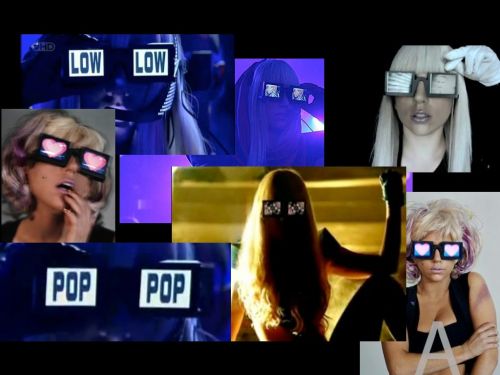
In addition to these speakers, there will also be several breakout sessions at the conference. And, as luck would have it, I will be presenting in one of them, as the paper I proposed on Lady Gaga and the role of nonhuman agency in twenty-first century celebrity has been accepted by the conference organizers! I am honored and excited to have the chance to speak in such distinguished company, and I very much look forward to the conference. In the meantime, here is the abstract for my talk:
Object-Oriented Gaga: Theorizing the Nonhuman Mediation of Twenty-First Century Celebrity
Shane Denson, Leibniz Universität Hannover
In this paper, I wish to explore (from a primarily media-theoretical perspective) how concepts of nonhuman agency and the distribution of human agency across networks of nonhuman objects contribute to, and help illuminate, an ongoing redefinition of celebrity personae in twenty-first century popular culture. As my central case study, I propose looking at Lady Gaga as a “serial figure”—as a persona that, not unlike figures such as Batman, Frankenstein, Dracula, or Tarzan, is serially instantiated across a variety of media, repeatedly restaged and remixed through an interplay of repetition and variation, thus embodying seriality as a plurimedial interface between trajectories of continuity and discontinuity. As with classic serial figures, whose liminal, double, or secret identities broker traffic between disparate—diegetic and extradiegetic, i.e. medial—times and spaces, so too does Lady Gaga articulate together various media (music, video, fashion, social media) and various sociocultural spheres, values, and identifications (mainstream, alternative, kitsch, pop/art, straight, queer). In this sense, Gaga may be seen to follow in the line of Elvis, David Bowie, and Madonna, among others. Setting these stars in relation to iconic fictional characters shaped by their many transitions between literature, film, radio, television, and digital media promises to shed light on the changing medial contours of contemporary popularity—especially when we consider the formal properties that enable serial figures’ longevity and flexibility: above all, their firm iconic grounding in networks of nonhuman objects (capes, masks, fangs, neckbolts, etc.) and their ontological vacillations between the human and the nonhuman (the animal, the technical, or the monstrous). Serial figures define a nexus of seriality and mediality, and by straddling the divide between medial “inside” and “outside” (e.g. between diegesis and framing medium, fiction and the “real world”), they are able to track media transformations over time and offer up images of the interconnected processes of medial and cultural change. This ability is grounded, then, in the inherent “queerness” of serial figures—the queer duplicity of their diegetic identities, of their extra- and intermedial proliferations, and of the networks of objects that define them. Lady Gaga transforms this queerness from a medial condition into an explicit ideology, one which sits uneasily between the mainstream and the exceptional, and she does so on the basis of a network of queer nonhuman objects—disco sticks, disco gloves, iPod LCD glasses, etc.—that alternate between (anthropocentrically defined) functionality and a sheer ornamentality of the object, in the process destabilizing the agency of the individual star and dispersing it amongst a network of nonhuman agencies. As an object-oriented serial figure, I propose, Lady Gaga may be an image of our contemporary convergence culture itself.
CFP: Contemporary Screen Narratives
Contemporary Screen Narratives: Storytelling’s Digital and Industrial Contexts
Conference to be held on 17 May 2012
Hosted by Department of Culture, Film and Media, University of Nottingham
Keynote speakers: Henry Jenkins and Jason Mittell
This one-day conference looks to trace connections between the narratives of contemporary screen media and their contexts of production, distribution and consumption. We refer here to narrative as the presentation and organisation of story via the semiotic phenomena of image, sound and written/spoken word. We anticipate that speakers will explore ways in which stories and their on-screen telling are informed by contemporary industrial and technological conditions. We invite contributions from postgraduate and early-career researchers working across screen-based narrative media, such as film, television, comics, literature, video games and other areas of new media. We are interested to receive all paper proposals pertinent to the conference topic, though we particularly welcome those that engage with the following themes and questions:
Industrial determinants. In what ways are stories and their telling contingent on the production cultures, distribution methods, revenue models and governmental policies that configure a given creative industry?
Digital Technologies. How has the construction and/or reception of narratives been influenced by digital production equipment, distribution tech, online platforms and consumer hardware devices?
Seriality and Transmedia: In what ways do serial narrative forms, whether disseminated within a given medium or across multiple media, reflect industrial and technological contexts?
Audio and Visual Styles: How are the sounds and visions of contemporary screen narratives informed by conditions of production and reception technologies?
Paratextual Surround: In what ways do promotional materials, practitioner discourses, fan cultures and critical/journalistic responses discursively frame screen narratives?
Send abstracts of 250 words to both:
Anthony Smith – aaxas4@nottingham.ac.uk
and
Aaron Calbreath-Frasieur – aaxac2@nottingham.ac.uk
Papers should not exceed twenty minutes in length.
The deadline for proposal submission is Monday 13 February 2012.
Deadline for proposal submission is now: 4 March 2012.
(Original CFP here: http://contemporaryscreennarratives.tumblr.com/)
Quantifying Digital Humanities (Infographic)
Daniel Stein on Comics Studies in Germany
Recently, Daniel Stein (my co-editor, along with Christina Meyer, on Transnational Perspectives on Graphic Narratives: Comics at the Crossroads) wrote an interesting report to which I’d like to draw readers’ attention. Entitled “Comics Studies in Germany: Where It’s At and Where it Might Be Heading,” the article first appeared at Comics Forum. Meanwhile, a German translation has appeared on the website of the Gesellschaft für Comicforschung (here). Whichever language you choose, please do check out Daniel’s article for an insightful look at the current state of a vibrant but still controversial field of research in the German context.
Jason Mittell: “Wikis and Participatory Fandom”
There are few technological developments that had more of a visible impact on participatory culture in the 2000s than the wiki. Although the software was designed for small-scale and local uses, wikis have emerged as a major tool used by internet users on a daily basis. From the world’s most popular encyclopedia, Wikipedia, to hundreds of specialized sites serving a vast array of subcultures and groups, wikis have become one of the hallmark tools of the participatory internet, or Web 2.0. This article will outline the development of wikis as a software platform and the cultural rise of Wikipedia before considering a range of participatory practices tied to one of the most widespread uses of wikis: as a tool for online fandom.
Bollywood Nation: Chak De! India
On Thursday, January 26, 2012, we will be screening the fifth and final film in our Bollywood Nation series: Chak De! India [Come on! India] (and not, as previously announced, Kabhi Khushi Kabhie Gham…). As usual, the screening will begin at 6:00 PM (room 615 in the Conti-Hochhaus). More information about the film can be found on imdb.com.
What are these Technological Things?
Over at in media res, what promises to be a great theme week has just gotten underway on the topic/question, “What are these Technological Things?”
Here is the complete schedule:
Monday, January 16, 2012 – Kristopher L. Cannon (Georgia State University) presents: Technological#Failure
Tuesday, January 17, 2012 – Kris Coffield (University of Hawaii) presents: Can the Sub-Object Speak?: Siri and the commodification of things
Wednesday, January 18, 2012 – Ravindra N. Mohabeer (Vancouver Island University) presents: Believing is Seeing: Is technology the material of futures?
Thursday, January 19, 2012 – Paul Boshears (European Graduate School) presents: Machine Love: the companionship of technology
Friday, January 20, 2012 – Benjamin Thevenin (University of Colorado, Boulder) presents: Thing Power: recognizing our reflections (or not) in our tablets
Theme week organized by Kristopher L. Cannon (Georgia State University).
Image from Tech Cocktail via Flickr. Used and altered under Creative Commons License permission.
Cultural and Media Theory: Media in Transition
Course description for a seminar I’ll be teaching in the summer semester (April – July 2012):
Cultural and Media Theory: Media in Transition
SE 2: Di 10:00/12:00 Raum: 1502.615, Beginn: 10.04.2012
Veranstalter/in: Denson
AmerA; AAS1.2
With regard to the structural roles and relations of media in virtually every aspect of our lives, ours is an era of significant — perhaps even fundamental — change. Digital media, in particular, have transformed entertainment, social interaction, politics, art, and academia, among other areas of human activity. About that, there is widespread agreement; there is little consensus, though, when it comes to assessing the significance of these changes or determining their exact nature. Does “media convergence” characterize something unique about our culture? What is new about “new media”? To begin answering these questions, we must take a broader look at the history of media and media change. In this course, we will therefore focus not only on contemporary media phenomena, but also on a variety of earlier media transformations and transitions in an effort to better understand our present situation. With a primary emphasis on American (popular) culture, but with an eye towards global changes, we will consider moments of change and transition in a wide range of media, including the book, the cinema, recorded music, and television. Please be aware that this is an intensive theory course; there will be a heavy workload in terms of reading assignments, comprising quite a number of difficult theoretical texts. Please enroll only if you are willing to do the readings and participate actively in theoretical discussions.
Required Reading
Please purchase a copy of the following book prior to the beginning of the course: David Thorburn and Henry Jenkins, eds. Rethinking Media Change: The Aesthetics of Transition. Cambridge, Mass.: MIT Press, 2003. (ISBN: 0262701073). Please read Chapter 1, “Introduction: Toward an Aesthetics of Transition,” and be prepared to discuss it on the first day of class!
Recommended Reading
n/a
Assessment Tasks – will be specified ● Registration – StudIP 1.3.2012 – 31.3.2012 ● Size restriction – 25 ● Prerequisites – Studienleistung(en) of “Intermediate Literature and Culture” ● Studiengänge – FüB.A., M Ed. LG, 3. Fach LG, MA AAS ● Further Information – shane.denson@engsem.~
Independent Study: Digital Media and Humanities Research
Course description for an independent studies course I’ll be teaching in the summer semester (April – July 2012):
Independent Study: Digital Media and Humanities Research
SE 2: nach Vereinbarung
Veranstalter/in: Denson
AAS6
This course is designed to accompany the seminar “Cultural and Media Theory: Media in Transition,” but it is open to all students in the Master of Advanced Anglophone Studies program for fulfillment of the “Independent Studies” module. Students in the course will investigate the impact and relevance of digital media for contemporary humanities research (including studies of literature, popular culture, film and other media). Beyond conducting a theoretical inquiry, however, we will be concerned with learning to use and evaluate the techniques, tools, and methods implemented in the “digital humanities” (DH) and related areas of academic research. Thus, we will experiment with applications for textual analysis, data visualization, digital video editing, social media, and blogs, to name a few, and put them to work in academic projects. Together, students will agree on a forum for the joint presentation of their work and organize a concluding event.
Students interested in participating should start familiarizing themselves with online discussions of “digital humanities” and looking at some of the tools used in various DH projects.
Required Reading
Please refer to the course page on StudIP.
Recommended Reading
n/a Assessment Tasks – will be specified ● Registration – StudIP 1.3.2012 – 31.3.2012 ● Size restriction – 25 ● Prerequisites – none ● Studiengänge – MA AAS ● Further Information – shane.denson@engsem.~
(image by nicomachus, created via www.wordle.net for http://nicomachus.net/2011/01/digital-humanities-blog-carnival-vol-1-issue-1/)


