Das Zwergenproblem — and how to solve it…

karinas_krass_people

What is the Zwergenproblem, or the problem of the gnome? Though this looks and sounds like one of those classic German words destined for import into the English of intellectuals (think of Zeitgeist, Weltanschauung, or Fahrvergnügen…), you won’t find the term “Zwergenproblem” in any dictionary. And yet it’s a widely shared opinion in Germany (at least in left-leaning circles) that garden gnomes — themselves typically Deutsch — are somewhat (how should I say?) problematic creatures. Their nation-based typicality is one of the problems, and they are aligned with a range of conservative political values as symbols of a bourgeois Sesshaftigkeit that finds its natural expression in the carefully mowed lawn and Garten of the proud homeowner/Dorfbewohner. This is by no means to say that gnomeownership, any more than homeownership, is a clear indication of one’s politics. Still, the associations and stereotypes are there — so much so, in fact, that garden gnomes have come to embody a downright cliché for a certain sort of lifestyle. Of course, the existence of a cliché always invites ironic appropriation as a response, and so recent times have seen the appearance of black-leather biker-gnomes, pot-smoking gnomes, and gnomes doing gnaughty things. Trying to dissociate gnomes from notions and practices of bürgerliche Spießigkeit, these have been attempts to solve what I am calling the Zwergenproblem. But none of them, it seems to me, has yet provided an adequate response, one suited to the true gravity of the situation.

revenge-is-pink

Meanwhile, beyond and outside of Germany, the garden gnome has come to represent a mostly white, middle-class, suburban existence in a depoliticized any-space-whatever. Garden gnome liberationism has emerged in response — an international effort to free the gnomic proletariat from their servitude, to return gnomes to the wild, and more generally to draw attention to their plight. And yet the political edge wears thin when these efforts devolve into “pranks.” The travelling gnome prank — in which mostly white, middle-class, suburban kids steal their neighbors’ gnomes and take them on vacation, photographing them in front of famous tourist attractions — is all good fun, as far as it goes, but it doesn’t really address the core of the Zwergenproblem. Clearly, this is because the prank is situated within the same space of possibility as the “straight” form of gnomeownership that it ostensibly questions: the space of material affluence, leisure, and the freedom to travel, where the suburban home materially anchors and spiritually secures the traveller’s foray “out into the world” like the warmth of Heidegger’s Hütte accompanied him along his Holzwege. Besides, any last drop of radical potential was drained when a major Internet travel company appropriated the prank for its marketing campaign, thus transforming the “liberated” garden gnome into a symbol for digitally enabled neo-liberal capital and the transnational flows of money, bits, and bodies. Behold: the neo-liberated gnome.
gnosferatu

This is where things get interesting, I think, and where a space for artistic intervention into the Zwergenproblem begins to disclose itself. The example of Internet-based travel, which of course depends on real money (hence real labor) and ideally gets real bodies to real places, places the garden gnome squarely in the realm of the so-called “new aesthetic” — which James Bridle describes as “a series of artefacts of the heterogeneous network, which recognises differences, the gaps in our overlapping but distant realities,” especially as concerns the intersection of material and digital realms. The neo-liberated gnome embodies capital as it flows within the control society, and it both emulates and encourages the “participatory culture” of viral marketing, whereby the unpaid immaterial labor done on social networks is appropriated and a surplus value is extracted by algorithmic means. What better mascot than the neo-liberated gnome, which bears witness to the wonders of the world, makes us hungry for travel (and for good-natured pranks), and even tempts us to donate our labor by posting pictures to Facebook et al that will serve as further advertisement for that travel company with the funny garden gnome…
????????????????????????????

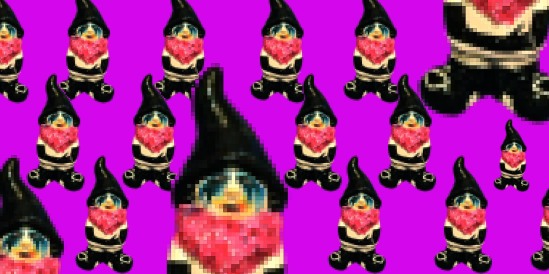
The association with the “new aesthetic” is even clearer in the context of 3D printing and scanning technologies, where the garden gnome has become a symbol for that magical intersection of materially unique objects rendered digitally reproducible, as in MakerBot’s extensive use of the gnome to demonstrate their machines. There should be no doubt about it: 3D printing really does involve a revolutionary sort of realignment of the physical and the ideal, but why should the garden gnome become the symbol for this transformation? The answer, I think, has to do with the fact that before it became the mascot for the new aesthetic, the garden gnome was a mascot for a putatively “old aesthetic” that itself was secretly bound up in the appearance of industrial modernity and its “aesthetic of the new.” The garden gnome’s origins are in nineteenth-century Germany; accordingly, the creatures must be seen as an essentially modern phenomenon, and as a part of the popular culture that begins to emerge in Europe alongside industrial technologies of production and communication. And yet they feign resistance to that culture, pretending to belong to a romanticized folk culture that is pitted against the emerging commercial popular culture. The gnome, in other words, claims allegiance to the oral culture and local tradition that bequeaths to us the fairy-tale, and it aims to distinguish itself from the mass-produced industrial culture of the modern world — to which, nevertheless, it essentially and materially belongs! Now, with the advent of 3D printing and design, the possibility of digital reproduction calls the gnomes’ bluff, makes their mass and serialized nature apparent, and reveals that they have been subject from the start to the same iterative principles as the serial figures of popular culture. What’s more: the digital infrastructure democratizes the production process, putting the means of production in the hands of the many (or at least in the hands of the growing number who have access to the technology). The gnome becomes shareable across time and space, and subject to a serial process of modification. But again there is the danger that the material and immaterial labor of this “participatory culture” is subject to appropriation and exploitation.
Gaga-Gnomes-Digital-Seriality_smallest

Besides, there’s nothing very subversive about printing born-digital gnomes in order to repeat the pranks of their more earthy forebears. If we’re really going to do something about the Zwergenproblem — i.e. if we are going to address the problematic politics of the garden gnome as it exists in our transitional moment — we will have to do so with a historical consciousness, one cognizant of the gnomes’ troubled history, their relation to modern production processes, material and immaterial labor, class consciousness, nationalism, popular and high-art cultural formations, and the role of seriality in all of these constellations.
frankie-and-bride

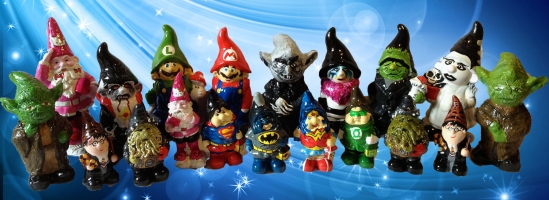
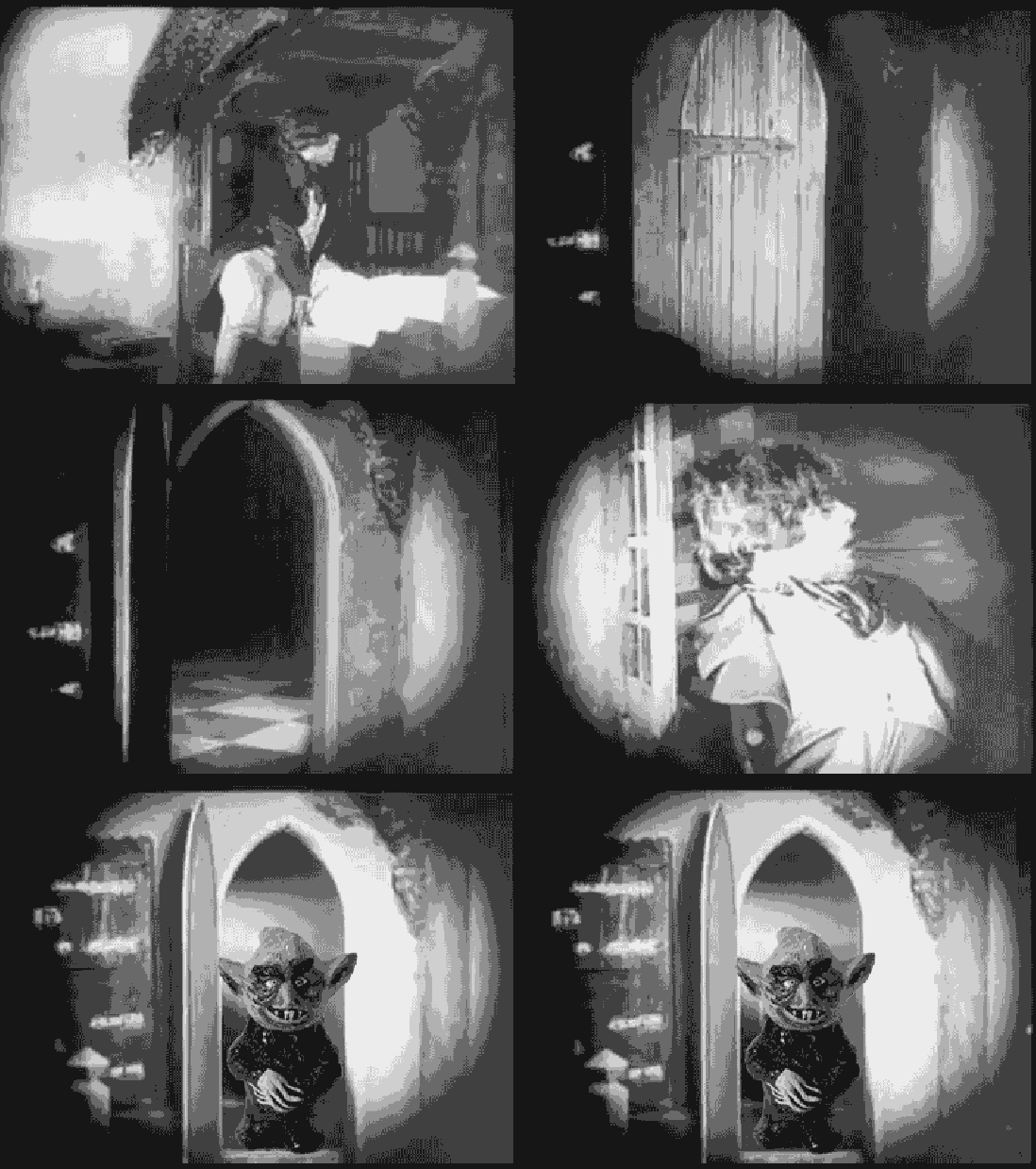
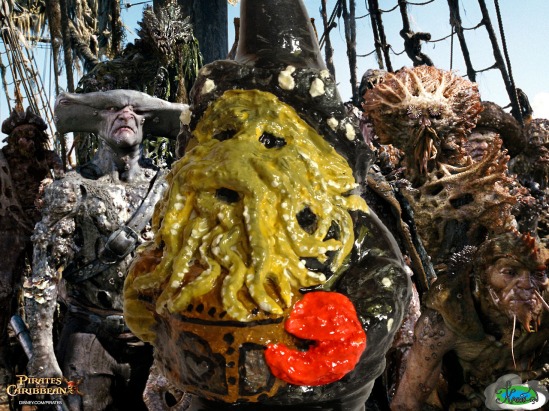
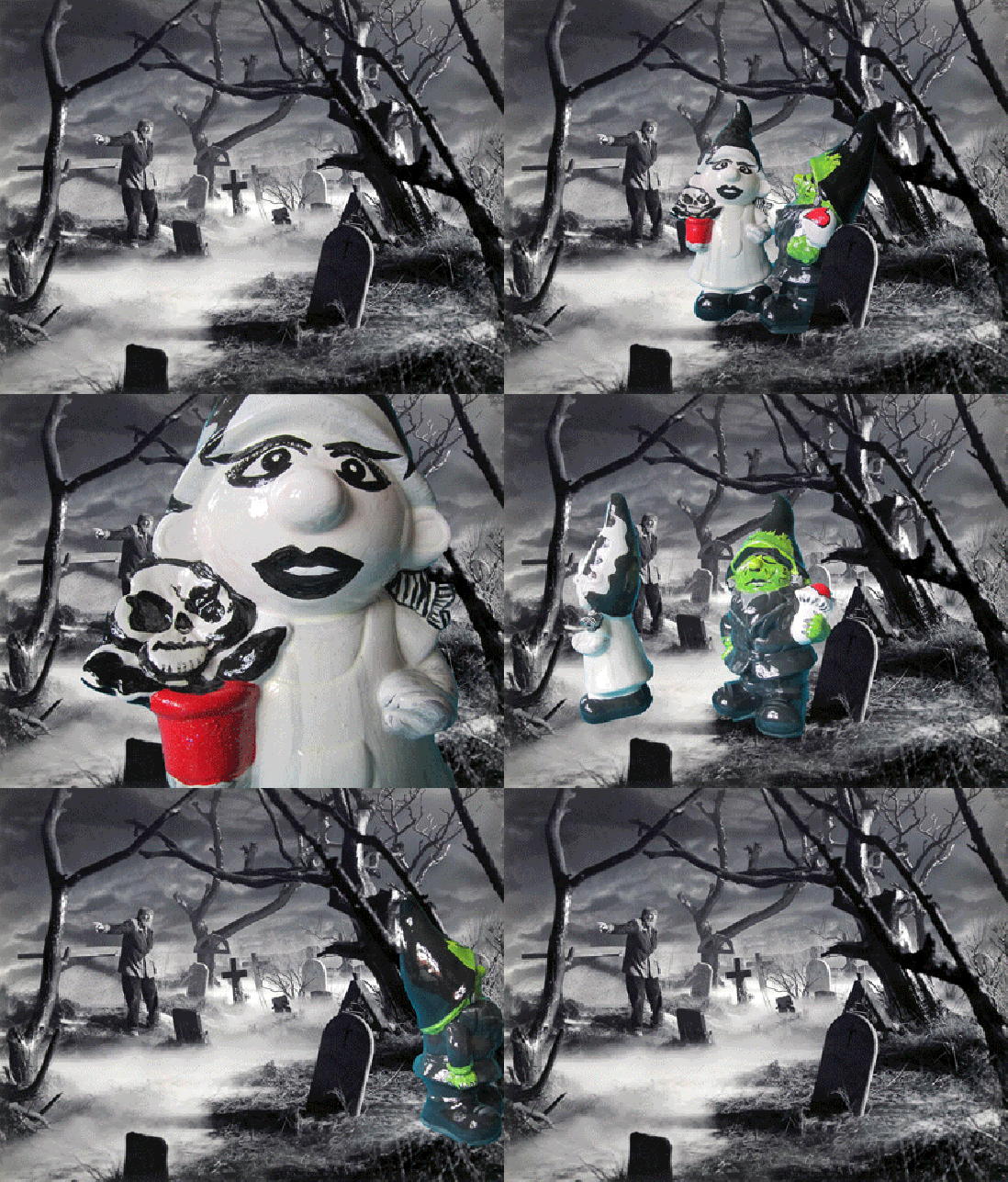
From an artistic perspective, no one is doing a better job of this at present, I think, than Karin Denson, with her “Krass People” series of gnomes, which are featured throughout this post. (Full disclosure: Karin is my wife. I’m biased. So what? No one’s got better gnomes than her!) Based on iconic figures from popular culture and modern art, her gnomes call into question the boundaries between industrial mass production, pre-modern handcraft, and modern and postmodern artistry. Half ready-made, half carefully crafted objects, the gnomes are collected from flea markets, outlet stores, garage sales, eBay, and wherever else they might be found, before they are hand painted and occasionally re-sculpted to resemble superheroes like Superman or Batman, creatures such as Nosferatu or Frankenstein’s monster, pop stars like Lady Gaga or David Bowie, figures from Star Wars or Pirates of the Caribbean, or re-imaginings of artworks by Duchamp, Miró, or Dalí. The result is a set of unique physical objects that retain strong conceptual and material links to the cultures of seriality that, since the nineteenth century, have increasingly and irrevocably problematized any notion of uniqueness or (artistic) authenticity. Finally, the objects are digitized and their images subjected to various further transformations: placed in Photoshop collages, set in motion in animated gifs, and displayed in a growing virtual gallery on tumblr. And that’s just the beginning: video, generative, and other works are in planning.
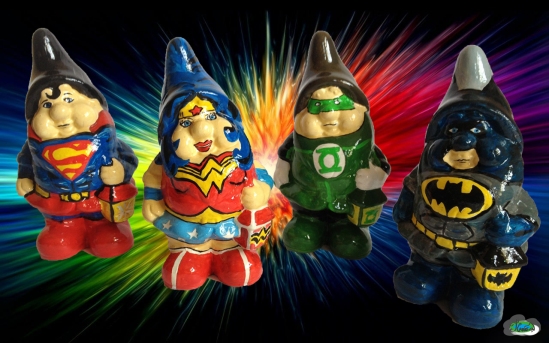
justice-gnomes

So does this answer the Zwergenproblem? Perhaps not completely. After all, can there be a truly final answer to a problem that is so thoroughly serial in both its historical genesis and its structural formation? Any answer, it would seem, would itself have to be serial rather than static. And that’s precisely what we have here: an ongoing, serially unfolding, plurimedial and mixed-reality approach that may not answer, but which first succeeds in formulating or addressing, that central problem of the modern world: das Zwergenproblem.
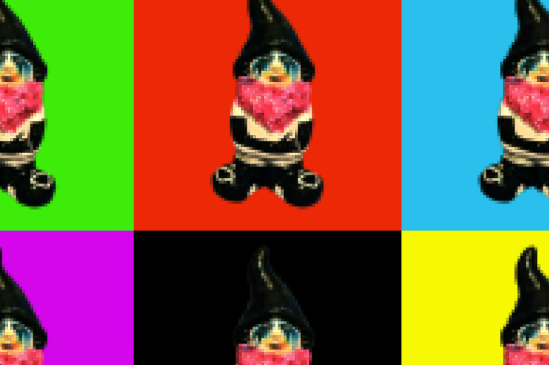
Gaga-Gnome-Applause-Series

Finally, in case you’re interested: Karin’s gnomes are available for purchase, but there is only a very limited supply of these (problematically) unique and labor-intensive objects. Karin will be exhibiting and selling them this coming Sunday, November 3, 2013, at the Kunsthandwerkermarkt at the Kulturzentrum Faust (from 11am to 5 pm in the “Warenannahme”).

[UPDATE: There’s now an Etsy store where the gnomes can be purchased online: https://www.etsy.com/shop/KrassStuff]
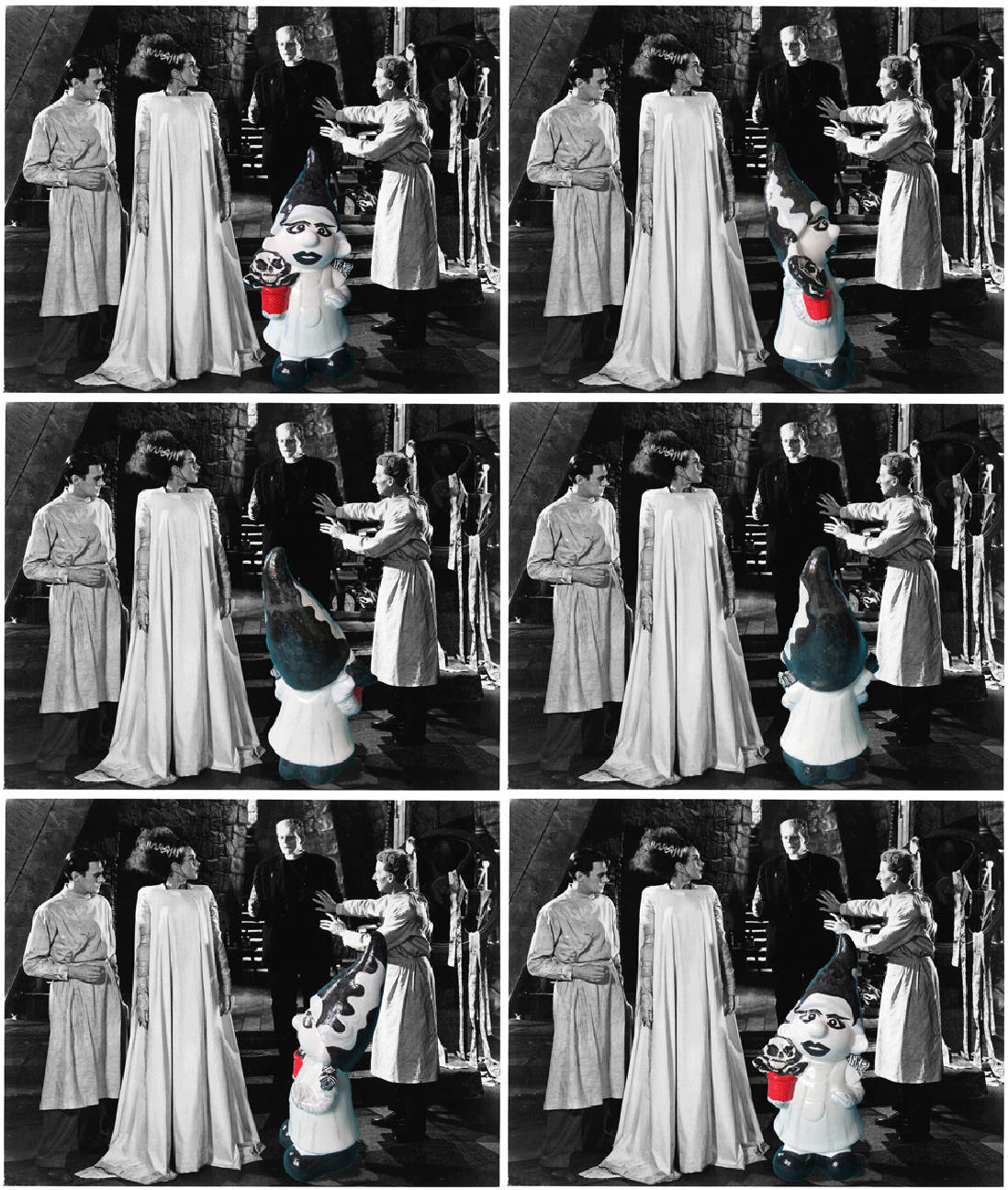
bride

Not Yet Titled: Alles in Ordnung

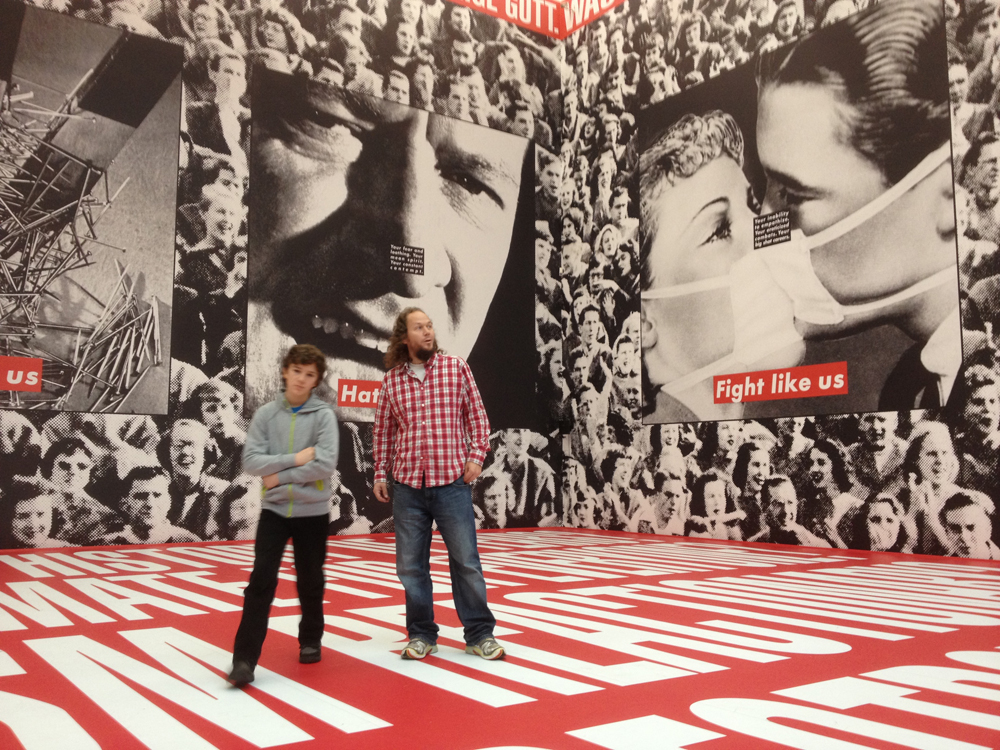
Kruger-installation-koeln-b

This weekend I had the pleasure of visiting the Museum Ludwig in Cologne, which is currently showing an exhibit called “Adjusted,” comprising a range of works by the American “Pictures Generation” artist Louise Lawler, alongside an all new permanent exhibition called “Not Yet Titled: Neu und für immer im Museum Ludwig” [Not Yet Titled: New and Forever in Museum Ludwig]. Apparently, the latter is less a permanent exhibition in the traditional sense, and more a semi-permanent configuration of museum space whose contents are scheduled to change; accordingly, it is not so much the artworks on display at any moment that constitute the object of the exhibition but rather the museum itself, its spaces and practices of exhibition, so that “Not Yet Titled” seems to defer closure in the interest of staging a quasi-permanent exhibition of flux. That’s a fairly self-reflexive undertaking, as are many of the works on display, so it’s especially refreshing to see that the museum manages to combine all this heady cross- and self-referencing with a material lightness, an architectural and visceral deferral of (en)closure that is all too often lacking in exhibitions of postmodern and semiotically complex works.

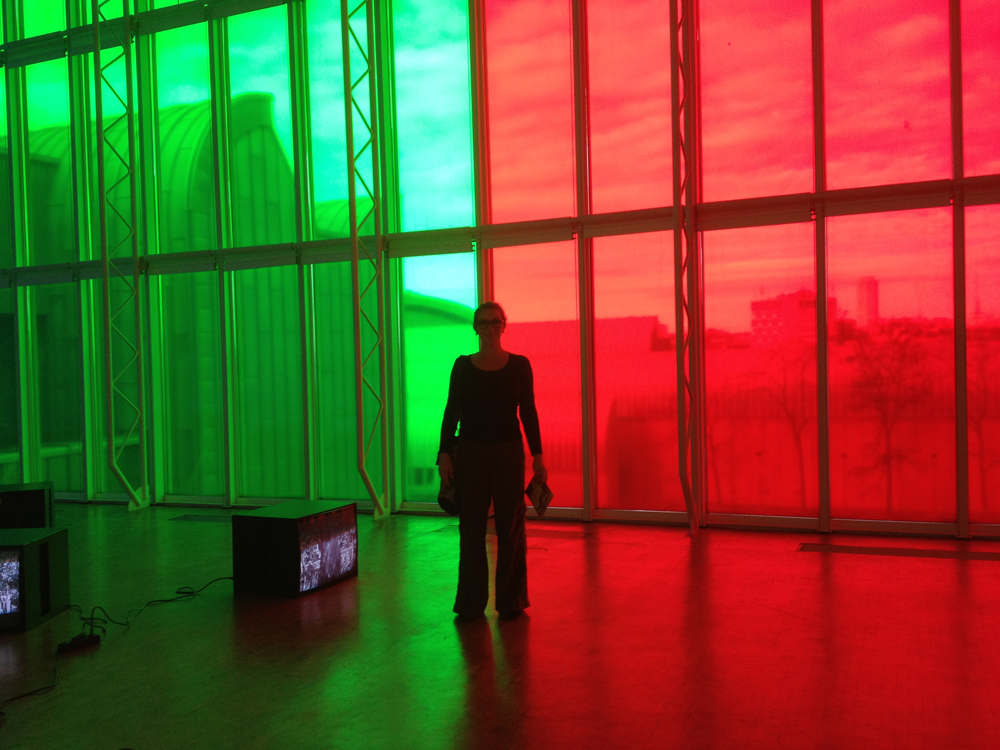
red-and-green-and-video-all-over-b

One of the exhibition’s centerpieces, Barbara Kruger’s large-scale untitled installation from 1994/1995, which you see at the top of this post (but which you also have to hear in order to appreciate fully), is a case in point: the dense commentary on our media culture, its reflexive irony and intertextuality, are embedded in a space that is at once overloaded and threatening and yet therapeutically soothing as well. The ecstatic sounds of a crowd cheering at the absurd acceptance speech for some unnamed award, where the awardee thanks his God and plays with dictatorial slogans, brainwashing tactics, sexist stereotypes and racist claims of superiority — all of these we register cognitively and appraise their political significance, but the applause enervates us directly, dangerously, on this open stage that seems as if it were designed to highlight the problematic political phenomenology of contemporary spaces: While immersed in the installation, we are able to feel the rich ambivalence of its space, which invites us both to recognize the coded nature of experience while also experiencing something that feels like a space for reflection; but the most surprising aspect of the space can only be grasped later, in a snapshot like mine above: Kruger’s installation, which positively begs to be remediated in the form of a photograph (while flaunting the fact that it can never be captured or encompassed in one), immediately collapses into a flat background, against which the human figure inevitably seems to have been added in later with Photoshop. (I swear, the picture above has not been retouched!)

Not only in Kruger’s installation, but throughout the permanent and temporary exhibitions, it was space that, for me, constituted the true attraction. Lawler’s highly self-reflexive photographs of other artists’ artworks (de- and re-contextualized to highlight the significance of exhibition practices and spatial orders) vacillated between a challenging semiotic complexity and a pleasant, almost banal decorative quality within the large open spaces of the Ludwig. Particularly refreshing was the newly commissioned Tracings series, which carries Lawler’s self-reflexive and intertextual tendencies further but abstracts them, reduces, and contributes to a clear open space. In this series, Lawler’s photos of other people’s art are reproduced again, but now in the simplified form of black contour lines upon a white background, thus transforming the high-resolution photographs and rendering the works more iconic and approachable. These oversized coloring-book pictures, which we survey upon exiting the smaller exhibition rooms in the wide monochromatic space in which we access the stairs, refer, of course, to the images we saw downstairs, but they also seem happy enough to slip into the background and assume a more functional, properly architectural role that does not force any sort of dialogue or commentary. Likewise, Lawler’s new Stretch images, which take Andy Warhol’s famous Brillo boxes as their “subject,” blown up to gigantic proportions to occupy two complete walls with anamorphically stretched photos, emphasize the space of the museum — both as an institution and as a material environment.

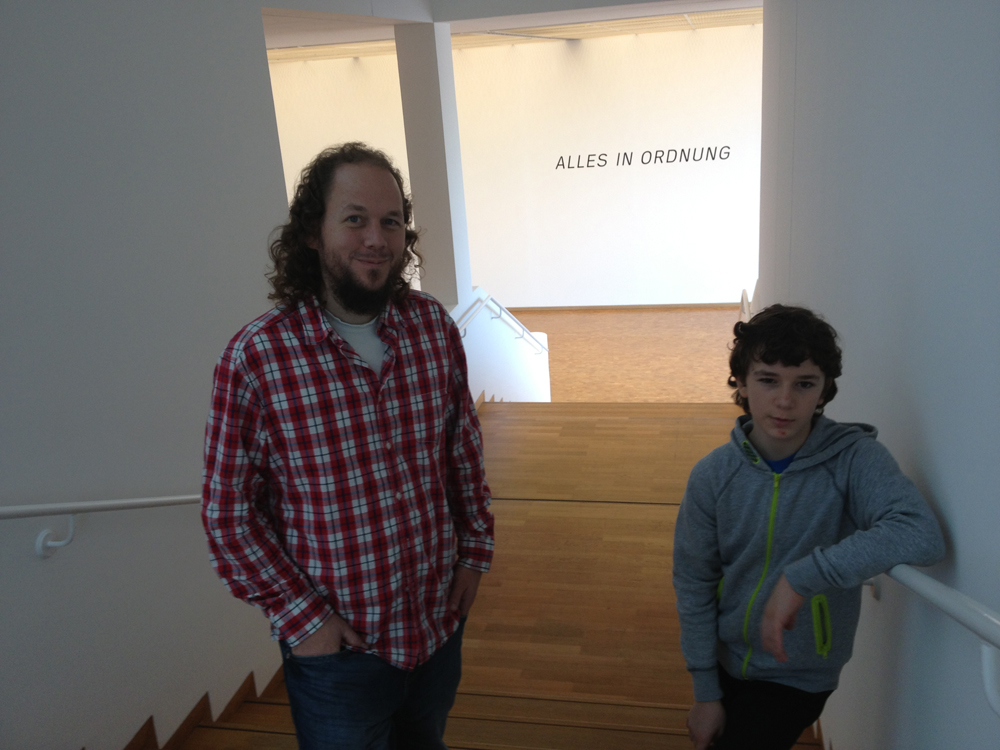
All in all, the current showings at the Museum Ludwig offer lots of food for thought — for reflection on the politics, history, and institution of contemporary art, for theoretically guided musings on the relations of art to mass media and our changing media of reproduction, and for thought about our own place within these configurations. If that’s what you’re looking for, you’re sure to be happy here. These exhibitions do more, though, as well, and something that many museums fail to do as they aim for more “interactive” forms of engagement (while misunderstanding “interactive” as “overstuffed and preemptively overladen with information”): namely, Lawler’s “Adjusted” and the (quasi-)permanent “Not Yet Titled” grasp the space of their own staging, clear it out for our experience, and remind us that we are bodies moving through space and time. Architectural space becomes affective space, and this affective space collides ambiguously with the content of the artworks displayed. The latter may make us know, on a cognitive and political level, that everything is not OK, but even just registering that in this wonderful space imparts a (not unproblematic) feeling, a not yet titled affect: “Alles in Ordnung” (irgendwie, vielleicht)…

alles-in-ordnung-b

Interview on Transnational Perspectives on Graphic Narratives

image

Over at his blog, Michael A. Chaney (professor of English and American Studies at Dartmouth College and director of the Illustration, Comics, and Animation conference there) has posted an interview he conducted with Daniel Stein, Christina Meyer, and myself on the topic of comics and our edited collection Transnational Perspectives on Graphic Narratives. Michael is a wonderful interviewer and an all-around great guy, and it was a lot of fun talking to him about our work. So take a look: here.

Post-Cinematic Perspectives

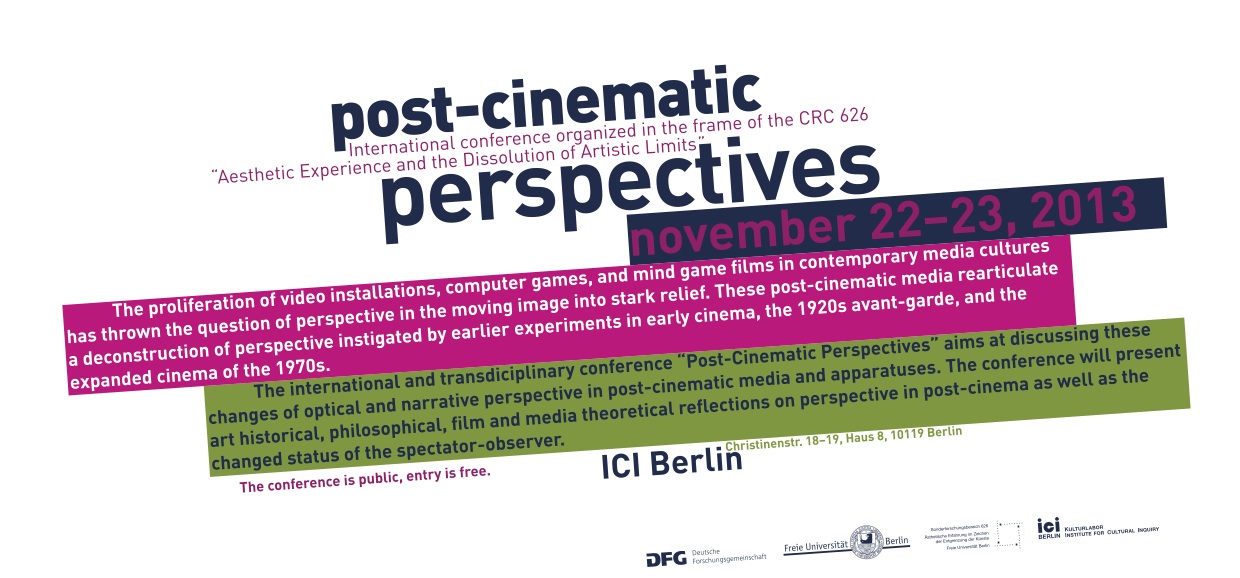
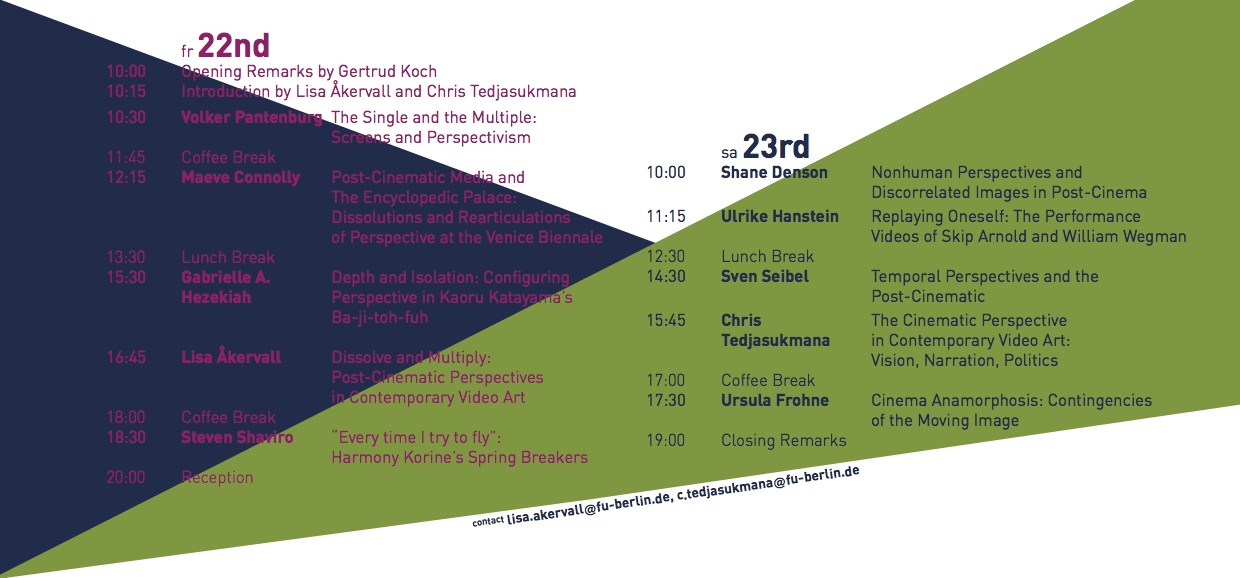
Programm_PerspectivesPostCinemaProgramm_PerspectivesPostCinema-2

On November 22-23, 2013, I will be participating in the conference “Post-Cinematic Perspectives,” which is being organized by Lisa Åkervall and Chris Tedjasukmana at the Freie Universität Berlin. There’s a great line-up, as you’ll see on the conference program above. I look forward to seeing Steven Shaviro again (and hearing his talk on Spring Breakers), and to meeting all the other speakers. My talk, on the morning of the 23rd, is entitled “Nonhuman Perspectives and Discorrelated Images in Post-Cinema.” The conference is open to the public, and attendance is free.

Now Open Access: Bildstörung / Image Interference

fantomas

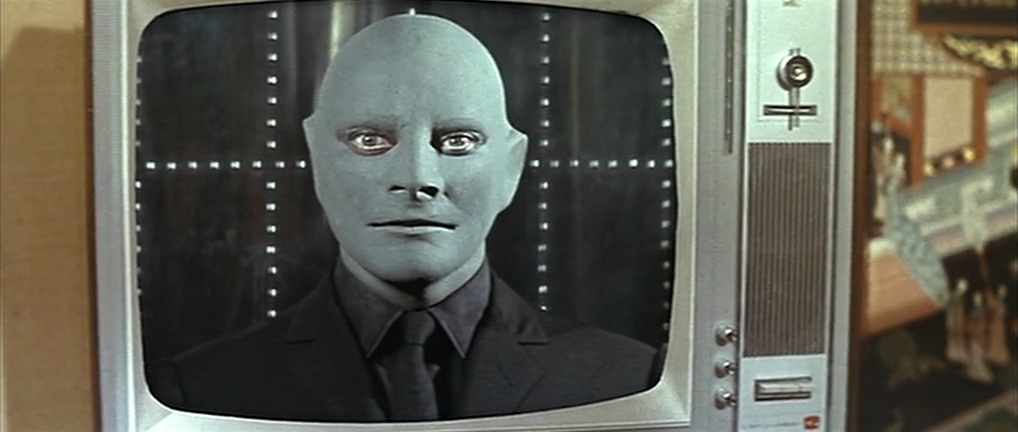
After appearing one year ago in Zeitschrift für Medienwissenschaft 7, the article “Bildstörung: Serielle Figuren und der Fernseher” [roughly, Image Interference: Serial Figures and the Television Set], co-authored by myself and Ruth Mayer, has now gone into open access and can be downloaded freely at the publisher’s website: here. In addition, the rest of the articles in this special issue devoted to “The Series” are now freely available here. I am very happy to be a part of this great collection, and I applaud ZfM‘s commitment to making their journals open access after an initial one-year print-only period.

Popular Seriality — Round Two!

popular_seriality_logo_550_300I am very excited to announce today that the DFG (Deutsche Forschungsgemeinschaft / German Research Foundation) has now officially approved the application of the Research Unit “Popular Seriality — Aesthetics and Practice” for a second 3-year funding period! From October 2013 through September 2016, we will continue our research on serial forms and processes in popular culture, this time around through seven newly developed projects:

Serial Politicization: On the Cultural Work of American City Mysteries, 1844-1860 (Daniel Stein, Berlin)

Serial Narration in Popular German-Language Periodicals from 1850 to 1890 (Claudia Stockinger and Stefan Scherer, Göttingen and Karslruhe)

Serializing Mass Culture: Popular Film Serials and Serial Structures in the United States, 1910-1940 (Ruth Mayer, with Ilka Brasch, Hannover)

Writing Series: The Occupational Culture of Present-Day German Televised Entertainment (Regina Bendix, Göttingen)

Retrospective Serialization: Remaking as a Method of Cinematic Self-Historicizing (Frank Kelleter and Kathleen Loock, Berlin)

Digital Seriality: The Serial Aesthetics and Practice of Digital Games (Shane Denson and Andreas Jahn-Sudmann, Hannover and Berlin)

Real-Life Storytelling: The Threefold Formal Structure of Reality TV as a Procedure of Cumulative Serialization (Christian Hißnauer, Göttingen)

For more information about the Research Unit — our past and present projects, publications, news, events, and other information — please refer to our official homepage: here.

Post-Cinematic Affect: Post-Continuity, the Irrational Camera, Thoughts on 3D

la_furia_umana

Last summer (2012), I participated in a roundtable discussion with Therese Grisham and Julia Leyda on the subject of “Post-Cinematic Affect: Post-Continuity, the Irrational Camera, Thoughts on 3D.” Drawing on Steven Shaviro’s book Post-Cinematic Affect, and looking at films such as District 9Melancholia, and Hugo, the roundtable appeared in the multilingual online journal La Furia Umana (issue 14, 2012). For some reason, the LFU site has been down for a few weeks, and I have no information about whether or when it will be back up. Accordingly, I wanted to point out for anyone who is interested that you can still find a copy of the roundtable discussion here (as a PDF on my academia page). Enjoy!

Digital Film, Chaos Cinema, Post-Cinematic Affect: Thinking 21st Century Motion Pictures

Here’s the course description for a graduate-level course I’ll be teaching in the winter semester (October 2013 – February 2014) — a PDF of the full syllabus is embedded above:

Digital Film, Chaos Cinema, Post-Cinematic Affect: Thinking 21st Century Motion Pictures

Instructor: Shane Denson

Course Description:

In this seminar, we will try to come to terms with twenty-first century motion pictures by thinking through a variety of concepts and theoretical approaches designed to explain their relations and differences from the cinema of the previous century. We will consider the impact of digital technologies on film, think about the cultural contexts and aesthetic practices of contemporary motion pictures, and try to understand the experiential dimensions of spectatorship in today’s altered viewing conditions. In addition to preparing weekly readings, students will be expected to view a variety of films prior to each class meeting.

Course Themes and Objectives:

In this course, we set out from the apparent “chaos” that contemporary cinema often presents to us: the seemingly incoherent and unmotivated camerawork and editing, for example, by which many action films of the twenty-first century mark their departure from the “classical” norms of Hollywood-style narration and formal construction. From here, we seek to make sense more generally of cinema’s transformation in terms of new technologies and techniques (e.g. digital imaging processes, nonlinear editing, and attendant editing styles), in terms of new modes of cinematic distribution and reception (e.g. DVD, Blu-Ray, and streaming services, HD TVs, smartphones, and tablet computers, but also IMAX 3-D and similar transformations of the big screen), in terms of non-classical narrative styles (e.g. recursive, database-like, non-linear, and even non-sequitur forms of storytelling), and in terms of broader phenomenological and environmental shifts that inform our experience, our embodiment, and our subjectivity in the digital era.

Several key concepts will help to orient our thinking about twenty-first century cinema and its relation to earlier cinematic modes. The first is “chaos cinema,” a term which Matthias Stork popularized in a compelling set of video essays focused particularly on recent action cinema; beyond this context, however, Stork’s notion of “chaos” resonates with the feelings and fears of many critics and theorists in the face of digital-era cinema. This broader perception of chaos is sometimes traced back to the digital unmooring of images from the indexical referents to which photographic films remained tied; on this basis, the somewhat oxymoronic term “digital film” is often linked to an even more unsettling, because more basic, sense of chaos: according to some critics, the digital (and the moving images it produces and supports) is correlated with a sweeping transformation of human society and subjectivity itself. On the other hand, though, not all critics are similarly alarmed by digital-era chaos. David Bordwell’s concept of “intensified continuity” effectively denies the radical stylistic break announced in Stork’s analysis; Bordwell sees the newer films as perhaps faster and even more hectic than classical Hollywood fare, but basically constructed according to principles of classical continuity – just intensified. By way of contrast, Steven Shaviro’s notion of “post-continuity” – developed in the context of his analysis of “post-cinematic affect” – provides another view of contemporary moving image culture, one which links formal and aesthetic transformations not only with new technologies but also with broader social, cultural, and economic changes underway right now.

As we think through these and related concepts, we will engage a variety of recent movies from formal, phenomenological, affective, cultural, and environmental perspectives. We will seek to understand whether a radical change has taken place in recent cinema, to assess what its significance might be, and in this way begin to think through the implications of and for our viewing habits in the twenty-first century.

You can find more of my syllabi here: http://uni-hannover.academia.edu/ShaneDenson

Super Star Trek and the Collective Serialization of the Digital

SuperStarTrek

Here’s a sneak peek at something I’ve been working on for a jointly authored piece with Andreas Jahn-Sudmann (more details soon!):

[…] whereas the relatively recent example of bullet time emphasizes the incredible speed of our contemporary technical infrastructure, which threatens at every moment to outstrip our phenomenal capacities, earlier examples often mediated something of an inverse experience: a mismatch between the futurist fantasy and the much slower pace necessitated by the techno-material realities of the day.

The example of Super Star Trek (1978) illuminates this inverse sort of experience and casts a media-archaeological light on collective serialization, by way of the early history of gaming communities and their initially halting articulation into proto-transmedia worlds. Super Star Trek was not the first – and far from the last – computer game to be based on the Star Trek media franchise (which encompasses the canonical TV series and films, along with their spin-offs in comics, novels, board games, role-playing games, and the larger Trekkie subculture). Wikipedia lists over seventy-five Trek-themed commercial computer, console, and arcade games since 1971 (“History of Star Trek Games”) – and the list is almost surely incomplete. Nevertheless, Super Star Trek played a special role in the home computing revolution, as its source code’s inclusion in the 1978 edition of David Ahl’s BASIC Computer Games was instrumental in making that book the first million-selling computer book.[i] The game would continue to exert a strong influence: it would go on to be packaged with new IBM PCs as part of the included GW-BASIC distribution, and it inspired countless ports, clones, and spin-offs in the 1980s and beyond.

A quick look at the game’s source code reveals that Super Star Trek didn’t just come out of nowhere, however: Here, the opening comment lines (“REM” indicates a non-executable “remark” in BASIC) mention not only the “Star Trek TV show” as an influence, but also a serial trajectory of inter-ludic programming, modification, debugging, and conversion (porting) that begins to outline a serialized collectivity of sorts. Beyond those participants mentioned by name (Mike Mayfield, David Ahl, Bob Leedom, and John Borders), a diffuse community is invoked – “with a little help from his friends…” – and, in fact, solicited: “comments, epithets, and suggestions” are to be sent personally to R. C. Leedom at Westinghouse Defense & Electronics. Reminiscent of a comic-book series’ “letters to the editor” page (cf. Kelleter and Stein 2012), this invitation promises, in conjunction with the listing of the game’s serial lineage, that readers’ opinions are valued, and that significant contributions will be rewarded (or at least honored with a hat-tip in the REM’s). Indeed, in these few preliminary lines, the program demonstrates its common ground with serialized production forms across media: since the nineteenth century, readers have written to the authors of ongoing series in order to praise or condemn – and ultimately to influence – the course of serial unfolding (cf. Hayward 1997, Looby 2004, Smith 1995, Thiesse 1980); authors dependent on the demands of a commercial marketplace were not at liberty simply to disregard their audience’s wishes, even if they were free to filter and select from among them. What we see, then, from an actor-network perspective, is that popular series therefore operate to create feedback loops in which authors and readers alike are involved in the production of serial forms (cf. Kelleter 2012a) – which therefore organize themselves as self-observing systems around which serialized forms of (para-)social interaction coalesce (cf. Kelleter 2012d, as well as the contributions to Kelleter 2012b).

The snippet of code above thus attests to the aspirations of a germinal community of hackers and gamers, which has tellingly chosen to align itself, in this case, with one of the most significant and quickly growing popular-culture fan communities of the time: viz. the Trekkie subculture, which can be seen to constitute a paradigmatic “seriality” in Anderson’s sense – a nation-like collective (complete with its own language) organized around the serialized consumption of serially structured media. And, indeed, the computing/gaming community had its own serialized media (and languages) through which it networked, including a plethora of computer-listings newsletters and magazines – such as David Ahl’s Creative Computing, where Super Star Trek had been published in 1974, before BASIC Computer Games made it more widely known; or People’s Computer Company, where Bob Leedom had mentioned his version before that; or the newsletter of the Digital Equipment Computer User Society, where Ahl had originally published a modified version of Mike Mayfield’s program. These publications served purposes very much like the comic-book and fanzine-type organs of other communities; here, however, it was code that was being published and discussed, thus serving as a platform for further involvement, tweaking, and feedback by countless others. Accordingly, behind the relatively linear story of development told in the REM’s above, there was actually a sprawling, non-linear form of para-ludic serialization at work in the development of Super Star Trek.[ii]

And yet we see something else here as well: despite the computing industry’s undeniable success in moving beyond specialized circles and involving ever larger groups of people in the activity of computing in the 1970s (and gaming must certainly be seen as central to achieving this success), the community described above was still operating with relatively crude means of collective serialization – more or less the same paper-bound forms of circulation that had served the textual and para-textual production of popular serialities since the nineteenth century. In many ways, this seems radically out of step with the space-age fantasy embodied in Super Star Trek: in order to play the game, one had to go through the painstaking (and mistake-prone) process of keying in the code by hand. If, afterwards, the program failed to run, the user would have to search for a misspelled command, a missing line, or some other bug in the system. And God forbid there was an error in the listing from which one was copying! Moreover, early versions of the game were designed for mainframe and minicomputers that, in many cases, were lacking a video terminal. The process of programming the game – or playing it, for that matter – was thus a slow process made even slower by interactions with punch-card interfaces. How, under these conditions, could one imagine oneself at the helm of the USS Enterprise? There was a mismatch, in other words, between the fantasy and the reality of early 1970s-era computing. But this discrepancy, with its own temporal and affective dynamics, was a framing condition for a form of collective serialization organized along very different lines from contemporary dreams of games’ seamless integration into transmedia worlds.

To begin with, it is quite significant that Super Star Trek’s functional equivalent of the “letters to the editor” page, where the ongoing serialization of the game is both documented and continued, is not printed in an instruction manual or other accompanying paraphernalia but embedded in the code itself. In contrast to the mostly invisible code executed in mainstream games today, Super Star Trek’s code was regarded as highly visible, the place where early gamers were most likely to read the solicitation to participate in a collective effort of development. Clearly, this is because they would have to read (and re-write) the code if they wished to play the game – while their success in actually getting it to work were more doubtful. Gameplay is here subordinated to coding, while the pleasures of both alike were those of an operational aesthetic: whether coding the game or playing it, mastery and control over the machine were at stake. Unlike the bullet time of The Matrix or Max Payne, which responds to an environment in which gamers (and others) are hard-pressed to keep up with the speed of computation, Super Star Trek speaks to a somewhat quainter, more humanistic dream of getting a computational (or intergalactic) jalopy up and running in the first place. In terms of temporal affectivities, patience is tested more so than quick reactions. If bullet time slowed down screen events while continuing to poll input devices as a means for players to cope with high-velocity challenges, the tasks of coding and playing Super Star Trek turn this situation around: it is not the computer but the human user who waits for – hopes for – a response. As a corollary, however, relatively quick progress was observable in the game’s inter-ludic development, which responded to rapid innovations in hardware and programming languages. This fact, which corresponded well with the basically humanistic optimism of the Star Trek fantasy (as opposed to the basically inhuman scenario of The Matrix), motivated further involvement in the series of inter-ludic developments (programming, modification, debugging, conversion…), which necessarily involved coder/tinkerers in the para-ludic exchanges upon which a gaming community was being built. […]


[i] A more complete story of the game’s history can be gleaned from several online sources which we draw on here: Maury Markowitz’s page devoted to the game, “Star Trek: To boldly go… and then spawn a million offshoots,” at his blog Games of Fame (http://gamesoffame.wordpress.com/star-trek/) features comments and correspondence with some of the key figures in the game’s development; Pete Turnbull also recounts the game’s history, including many of the details of its many ports to various systems (http://www.dunnington.u-net.com/public/startrek/); atariarchives.org hosts a complete scan of the 1978 edition of BASIC Computer Games, from which we reproduce an excerpt below (http://www.atariarchives.org/basicgames/); and a recent article in The Register, Tony Smith’s “Star Trek: The Original Computer Game,” features several screenshots and code snippets of various iterations (http://www.theregister.co.uk/Print/2013/05/03/antique_code_show_star_trek/).

[ii] A better sense of this can be had by taking a look at all the various iterations of the game – encompassing versions for a variety of flavors of BASIC and other languages as well – collected by Pete Turnbull (http://www.dunnington.u-net.com/public/startrek/).

Works Cited

Hayward, J. (1997) Consuming Pleasures: Active Audiences and Serial Fictions from Dickens to Soap Opera. Lexington: UP of Kentucky.

Kelleter, F. (2012a) Populäre Serialität: Eine Einführung. In Kelleter F., ed. Populäre Serialität: Narration – Evolution – Distinktion. Zum seriellen Erzählen seit dem 19. Jahrhundert. Bielefeld: Transcript, pp. 11-46.

Kelleter, F., ed. (2012b) Populäre Serialität: Narration – Evolution – Distinktion. Zum seriellen Erzählen seit dem 19. Jahrhundert. Bielefeld: Transcript.

Kelleter, F. (2012d) The Wire and Its Readers. In Kennedy, L. and Shapiro, S., eds. “The Wire”: Race, Class, and Genre. Ann Arbor: U of Michigan P, pp. 33-70.

Kelleter, F. and Stein, D. (2012) Autorisierungspraktiken seriellen Erzählens: Zur Gattungsentwicklung von Superheldencomics. In Kelleter, F., ed. Populäre Serialität: Narration – Evolution – Distinktion. Zum seriellen Erzählen seit dem 19. Jahrhundert. Bielefeld: Transcript, pp. 259-290.

Looby, C. (2004) Southworth and Seriality: The Hidden Hand in the New York Ledger. Nineteenth-Century Literature 59.2, pp. 179-211.

Smith, S. B. (1995) Serialization and the Nature of Uncle Tom’s Cabin. In Price, K. M. and Smith, S. B., eds. Periodical Literature in Nineteenth-Century America. Charlottesville: UP of Virginia, pp. 69-89.

Thiesse, A.-M. (1980) L’education sociale d’un romancier: le cas d’Eugène Sue. Actes de la recherche en sciences sociales 32-33, pp. 51-63.

Serialization in Popular Culture

figure2b-pauline

Above, two stills from The Perils of Pauline, which I take here as an opportunity to announce an exciting book set to come out at the end of this year: Serialization in Popular Culture, edited by Robert Allen and Thijs van den Berg at the University of Amsterdam. The book, which I am very proud to be a part of (with a piece called “The Logic of the Line Segment: Continuity and Discontinuity in the Serial-Queen Melodrama”), will be published by Routledge as part of the Routledge Research in Cultural and Media Studies series.

Here’s a brief description of the collection:

From prime-time television shows and graphic novels to the development of computer game expansion packs, the recent explosion of popular serials has provoked renewed interest in the history and economics of serialization, as well as the impact of this cultural form on readers, viewers, and gamers. In this volume, contributors—literary scholars, media theorists, and specialists in comics, graphic novels, and digital culture—examine the economic, narratological, and social effects of serials from the nineteenth to the twenty-first century and offer some predictions of where the form will go from here.

With sections on “Victorian Serials,” “Serialization on Screen,” “Serialization in Comic Books and Graphic Novels,” and “Digital Serialization,” this book is going to be an important contribution to the emerging field of seriality studies. But don’t take my word for it; here’s an endorsement from an expert in the field:

“This collection presents an ambitious and original intervention in the field of seriality studies. It captures the workings of serialization as a core principle of modernity by taking stock of a wide range of medial formats and narrative and non-narrative configurations from the nineteenth century to the present time.” — Ruth Mayer, University of Hanover, Germany