Indexicality as “Shadow Archive” in Post-Cinema — Ozgun Eylul Iscen

homemoviesgaza-glitch

Ozgun Eylul Iscen’s abstract for the panel “Generativity and Creative Agency in Post-Cinematic Media” at SLSA 2016 in Atlanta:

Indexicality as “Shadow Archive” in Post-Cinema

Ozgun Eylul Iscen, Duke University

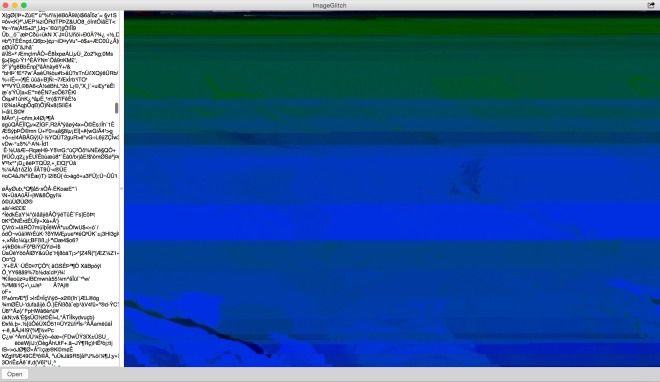
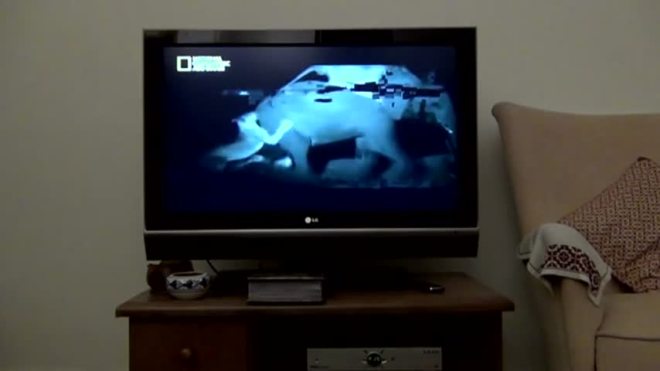
If technical infrastructures are no longer homogenous with surface appearances in the era of computerized and networked media, how can we reach out to the structures that are not available to us immediately but that underlie the very constitution of the digital image itself? Can a digital image become an index of its own mediation? In this paper, I draw upon Akira Mazuta Lippit’s notion of the “shadow archive” (as inspired by Derrida); the concept underlines an accumulation of accidental recollections and enfolded traces at the edge of visibility, thus taking the form of “avisuality.” I propose that the notion of shadow archive could play a key role in mapping out the diverse layers of digital processes that act while remaining invisible. This raises questions about whether it is possible to trace back those layers, what kind of aesthetics would be called for, and what the political significance would be. For instance, glitch, as an error within a digital image, can be indexical of an ‘accident’ in hardware or in the material infrastructure (e.g. electricity). While the visibility of a digital image deteriorates, the invisible but constitutive elements of the image come to the surface. Thus, glitch reminds us of digital information’s analog roots, confronts the apparent perfectness of the digital, and reveals both the materiality and the ideology that digital media are built on. I argue that this understanding of indexicality as a shadow archive underscores digital imagery’s analog roots and its processual and immanent nature.

Between Information and Fabulation: Cinema After Drones — Mark B. N. Hansen

omerfast-5000ft

Mark Hansen’s abstract for the panel “Generativity and Creative Agency in Post-Cinematic Media” at SLSA 2016 in Atlanta:

Between Information and Fabulation: Cinema After Drones

Mark Hansen, Duke University

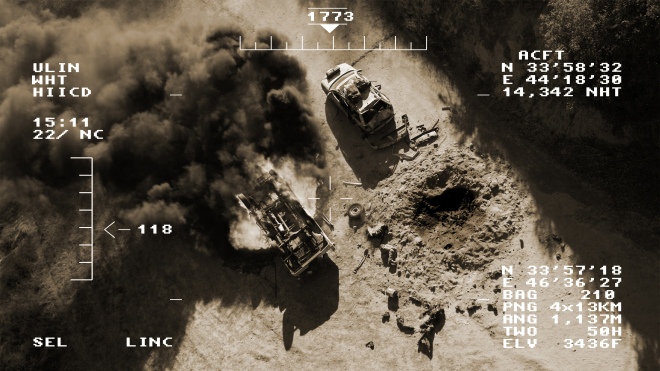
This talk focuses on the use of high speed digital video cameras onboard Unmanned Aerial Vehicles or military drones to gather “intelligence, surveillance, and reconnaissance” (ISR).  In order to address the key “aesthetic” issue involved here—the question of whether such ISR can be said to operate through the register of the visible, and thus the question of where to locate its cinematic dimension—I shall approach the images generated by drone reconnaissance on two planes: as a source of information that can only be analyzed by computers and as a “vision machine” that renders visibility asymmetrical in order to identify it with power.  My talk will think with and through Israeli artist Omer Fast’s 2011 video 5000 Feet is the Best in order to explore: 1) the decoupling of “cinema” from human perception that is at issue in ISR images; and 2) how a cinematic aesthetic can create an indirect perceptual interface onto the imperceptible, informational domain “machinically-presentified” by and through these images.

Playing the Photographer: Creative Self-Expression through In-Game Photography — Jason Lajoie

The Last of Us™ Remastered_20140801163128

Jason Lajoie’s abstract for the panel “Generativity and Creative Agency in Post-Cinematic Media” at SLSA 2016 in Atlanta:

Playing the Photographer: Creative Self-Expression through In-Game Photography

Jason Lajoie, University of Waterloo

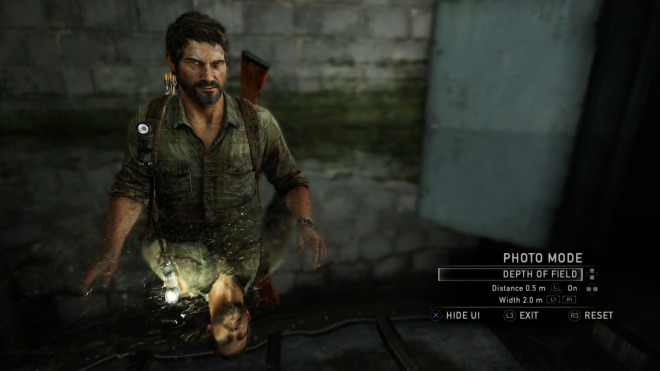
The photo editor mode offered in The Last of Us Remastered (TLOUR), Naughty Dog’s 2014 Playstation 4 port of their 2013 Playstation 3 game, offers players the means to take a photo at any point in the game. This option alters and can also elevate user engagement within the game. It can also make statements about self-expression through gameplay, as notably illustrated by conflict photographer Ashley Gilbertson, who applied the same techniques he acquired in real-world conflict zones to the fictitious battlegrounds in the game, achieving his photographs by considering his situatedness as real spectator in virtual environments. From a game studies perspective, the photo editor mode enables new ways for players and designers to think about game design, and offers innovative means of expression for players to interact in a creative game space. My investigation draws on Roland Barthes’s exploration into the affective capacity of photographs, and Jose Van Dijck’s claim that the malleability and manipulability of digital photography affects the formation of identity by repurposing our memories and means of communication. What are the affective resonances of photographs on real spectators when the spectrum itself is virtual? By exploring the use of photo editor modes in TLOUR, and in other Playstation 4 titles like The Order: 1886, I consider the ways this program expands the affordances of gameplay and narrativity by providing players interactive means for creative expression in otherwise restrictive and linear game modes.

Post-Cinema (Book Trailer)

Here is a short “book trailer” for the open-access collection Post-Cinema: Theorizing 21st-Century Film, edited by Shane Denson and Julia Leyda (REFRAME Books, 2016).

Also, don’t forget that we’ll be having a book launch party at Pro qm Books in Berlin this coming Friday, June 24. See here for more info and a flyer.

Post-Cinema Book Launch Party

book-launch-150dpi

On June 24, 2016, Julia Leyda and I will be celebrating the launch of our co-edited book Post-Cinema: Theorizing 21st-Century Film at Pro qm Books in Berlin. Several contributors will be on hand as well for a short book presentation, Q&A, and wine!

See the flyer above for details, and come out if you’re in the neighborhood!

Hyperdistractions

2016-05-31 06.54.19 am

My review of Dominic Pettman’s short book Infinite Distraction: Looking at Social Media is up now at the Los Angeles Review of Books (LARB). In the review, I explore particularly the stakes of “distraction,” which Pettman borrows from Kracauer and Benjamin, and the way that their concept of Zerstreuung might help us to understand our age of “scatterbrained” multitasking and develop an appropriate response. With a nod to Marshall McLuhan and his notions of “hot” and “cool” media, I try to understand Pettman’s politics of distraction, which itself responds to Bernard Stiegler’s phenomenology of mediated temporality: “In the face of ultra-cool media, we have to learn to be ice cold. In the face of the always already ‘meta’ relation of social media to our divided, distracted attentions, we have to learn to be infinitely more distracted. Hypersynchronization and hypermodulation call for nothing less than hyperdistraction.” In the end, I am critical of what I refer to as the book’s “humanistic vision” and its “communicational bias,” but I certainly recommend engaging with Pettman’s thought-provoking and in many ways open-ended book, which I see sowing seeds for future thinking and action in the realm of social media.

Read the whole review here.

Post-Cinema AR

13122900_1733166986928333_1269794987351584805_o13131607_1733166983595000_88851548299674089_o

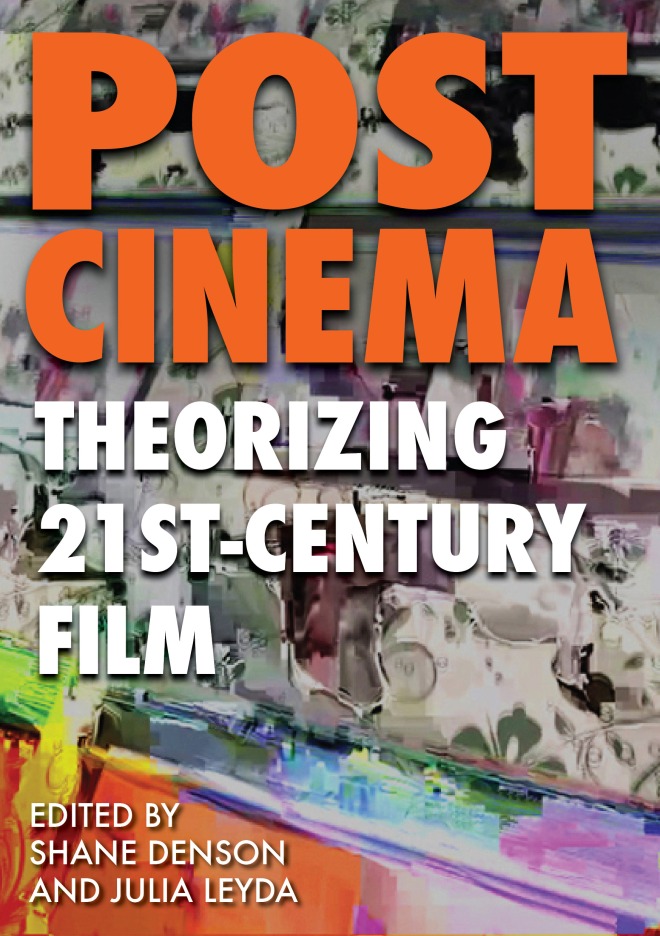
The augmented reality piece featured on the cover of Post-Cinema: Theorizing 21st-Century Film (http://reframe.sussex.ac.uk/post-cinema/), a collaborative piece made by Karin Denson and me, was displayed recently at a glitch-oriented gallery show organized by some nice people associated with Savannah College of Art and Design.

Try it out for yourself here: http://reframe.sussex.ac.uk/post-cinema/artwork/.

Out Now — Post-Cinema: Theorizing 21st-Century Film

Post_cinema_cover_NEW

I am happy to announce, at long last, the publication of Post-Cinema: Theorizing 21st-Century Film, edited by Shane Denson and Julia Leyda, which is out today as a completely free and open-access volume with REFRAME Books.

If cinema and television, as the dominant media of the 20th century, shaped and reflected our cultural sensibilities, how do new digital media in the 21st century help to shape and reflect new forms of sensibility? In this collection, editors Shane Denson and Julia Leyda have gathered a range of essays that approach this question by way of a critical engagement with the notion of “post-cinema.” Contributors explore key experiential, technological, political, historical, and ecological aspects of the transition from a cinematic to a post-cinematic media regime and articulate both continuities and disjunctures between film’s first and second centuries.

The book will appear in several digital formats: the web-based version is online today, and several ebook formats will be appearing soon.

The book brings together foundational texts by some of the key voices in the discussion of post-cinema and places them next to a range of brand-new chapters, as well as a series of roundtable discussions.

The long list of contributors includes:

Caitlin Benson-Allott, Paul Bowman, Felix Brinker, Kristopher L. Cannon, Francesco Casetti, Steen Christiansen, Elena del Río, Shane Denson, Rosalind Galt, Therese Grisham, Richard Grusin, Leon Gurevitch, Mark B. N. Hansen, Bruce Isaacs, Adrian Ivakhiv, Kylie Jarrett, Selmin Kara, ​Julia Leyda, Patricia MacCormack, Lev Manovich, Ruth Mayer, Michael O’Rourke, Patricia Pisters, Alessandra Raengo, David Rambo, Nicholas Rombes, Sergi Sánchez, Karin Sellberg, Steven Shaviro, Michael Loren Siegel, Vivian Sobchack, Billy Stevenson, Andreas Sudmann

Here is the table of contents:

Post-Cinema-TOC

A brief “press release” with a description of the book and the complete table of contents is available here (opens as a PDF): POST-CINEMA-Press-Release

Reframe_Books_black