Nonhuman Turn: Preliminary Schedule

[scribd id=83157625 key=key-kjw30kh28npillit3iq mode=list]

The preliminary schedule for the Nonhuman Turn conference, where I’ll be presenting a paper on Lady Gaga, is now online, as I just learned from Adrian Ivakhiv (who has also just posted the abstract for his talk, “Process-Relational Theory and the Eco-Ontological Turn: Clearing the Ground between Whitehead, Deleuze, and Harman.”) For the sake of convenience, I have taken the liberty of embedding the schedule here.

Networks of Mediation

This is the abstract for a talk I’ll be giving in Mannheim, at a conference entitled “Networks in American Culture/America as Network” (16-17 March 2012):

Networks of Mediation: Serial Figures as Mediators of Change

Shane Denson

Series, in a wide range of forms, constitute not only the “contents” of various media (television, film, literature, etc.), but might also might be conceived as media in their own right—though in a somewhat unorthodox, non-apparatic sense of the word. Here “medium” is related to “milieu”: environment for expression, articulation, action, or agency. Conceiving media this way means seeing them not simply as channels for communication between pre-existing agencies, but as co-constitutive of the agential potentials that can be realized in a given environment; in Bruno Latour’s terms, media and media-technologies are not mere “intermediaries” but active “mediators” that themselves enable distinctions between subjects and objects and thus play a radically non-neutral role in constructing networks of communication and interaction. Clearly, narrative television series, as one example, can be said to constitute the milieux in which their characters live and act; but to position series as media in a strong sense is to suggest a perspectival inversion of form/content relations, i.e. to see the framing medium of the televisual, filmic, or other apparatus as, in a sense, framed (or re-framed) by the series conventionally taken as that medium’s content. This reversal, I contend, is not arbitrary, but instead effected from within series themselves; the agents behind such inversions are those serially instantiated figures (e.g. Frankenstein, Tarzan, Batman, or Dracula) that populate series and move between a range of media, thus serving as loci for the proliferation of plurimedial networks. Such figures lead a double existence, at once anchored in the linear chains of ongoing monomedial series and also living in the interstices between (apparatic) media, forging decentralized or distributed nets or meshes among them. And particularly the interchange between linear and non-linear serial forms sheds light on transformations in the apparatic and discursive media that carry (and are carried by) series as mediators of media networks.

Digital Humanities Resources

[youtube http://www.youtube.com/watch?v=cx9DRazb6ZE]

In preparation for the independent studies course on “Digital Media and Humanities Research” that I’ll be supervising in the summer semester 2012, I’m asking prospective students to familiarize themselves with discussions and debates around the digital humanities. To get started, I thought I’d pull together a few relevant links.

First, the four videos embedded in this post offer a quick sampling of DH projects through lightning talks by recipients of grants from the National Endowment for the Humanities Office of Digital Humanities. (By clicking on any of these videos, you will be directed to the Youtube pages where you can find links to the individual projects presented.)

[youtube http://www.youtube.com/watch?v=JFSyMgVbHpg]

Next, a really great place to get started is with a blog post entitled, appropriately enough, “Getting Started in the Digital Humanities” (over at Lisa Spiro’s blog Digital Scholarship in the Humanities). In fact, there are enough links collected there, all usefully contextualized, to get a really good feel for the type of work going on in the digital humanities, so if getting started and getting oriented were the only objectives, I could basically just leave it at that. Certainly, one could do worse than to just follow Spiro’s links (and then the further links to be found at the pages thus linked) — DH is a highly networked field of inquiry, discussion, and debate, so in this way (i.e. starting from that blog post) you’d likely run into just about all the critical sites and positions in the field in due time.

[youtube http://www.youtube.com/watch?v=RClZF4Sroi8]

Nevertheless, I also wanted to point more explicitly to some of the debates going on in and around DH, which is not only one of the fastest growing but also one of the most contested areas of humanities at the current moment. One of the best resources here is the brand new collection Debates in the Digital Humanities, edited by Matthew K. Gold. But there are (of course) also lots of relevant pieces online, and these are just a few:

Kathleen Fitzpatrick’s positive, inspiring message, “Do ‘the Risky Thing’ in Digital Humanities,” speaks to the excitement that a lot of scholars (and students) feel when they come into contact with DH. Stanley Fish’s New York Times opinion piece, “The Old Order Changeth,” puts forward a much more skeptical view of this excitement, while Fish’s follow-up piece, “The Digital Humanities and the Transcending of Mortality,” goes so far as to call it a positively “theological” fervor. Needless to say, Fish’s interventions have stirred up quite a controversy among DH people.

Though not a direct rejoinder to Fish’s criticisms, another piece by Kathleen Fitzpatrick, “Networking the Field,” might be profitably read with an eye to evaluating Fish’s take on DH; however, Fitzpatrick’s paper (originally a talk she gave at MLA 2012) is much more than that, as it offers an eloquent assessment of what she takes to be some of the central challenges (rather than theological dogmas) of digital humanities today. (Meanwhile, Fish has continued to pronounce the divide he sees between digital humanities and traditional humanities in another controversial piece, “Mind Your P’s and B’s: The Digital Humanities and Interpretation.”)

Finally, Ian Bogost has added a very different skeptical voice to the debates. Bogost is, among other things, a game designer and scholar, so his skepticism is hardly directed at the “digital” in “digital humanities.” Instead, in his posts “The Turtlenecked Hairshirt” and (the more recent) “This is a Blog Post About the Digital Humanities,” Bogost’s skepticism is directed at the self-referential, meta-level discourse about the digital humanities that he sees DH indulging in at the expense of making, building, or creating something. Whether or not one agrees with Bogost’s criticism, he certainly speaks to a central tension, and to the search for balance, between the levels of (meta-)theory and practice that in many ways shape the field of DH.

Again, these are just starting points, hardly a comprehensive guide to contemporary positions, debates, methodologies, or research perspectives. Again, for a significant step in that direction, I recommend Matthew K Gold’s new edited volume, Debates in the Digital Humanities. Finally, I welcome (and would very much appreciate) comments and links to other sites that might be of value to students just getting oriented in DH!

[youtube http://www.youtube.com/watch?v=YxQKApXu3Xk]

Object-Oriented Gaga and the Nonhuman Turn

A while back, I posted the CFP for a conference on “The Nonhuman Turn in 21st Century Studies” to be held at the Center for 21st Century Studies at the University of Wisconsin-Milwaukee, May 3-5, 2012 (the original announcement is here). The lineup of invited speakers, in case you haven’t seen it, is very impressive:

Jane Bennett (Political Science, Johns Hopkins)

Ian Bogost (Literature, Communication, Culture, Georgia Tech)

Wendy Chun (Media and Modern Culture, Brown)

Mark Hansen (Literature, Duke)

Erin Manning (Philosophy/Dance, Concordia University, Montreal)

Brian Massumi (Philosophy, University of Montreal)

Tim Morton (English, UC-Davis)

Steven Shaviro (English, Wayne State)

In addition to these speakers, there will also be several breakout sessions at the conference. And, as luck would have it, I will be presenting in one of them, as the paper I proposed on Lady Gaga and the role of nonhuman agency in twenty-first century celebrity has been accepted by the conference organizers! I am honored and excited to have the chance to speak in such distinguished company, and I very much look forward to the conference. In the meantime, here is the abstract for my talk:

Object-Oriented Gaga: Theorizing the Nonhuman Mediation of Twenty-First Century Celebrity

Shane Denson, Leibniz Universität Hannover

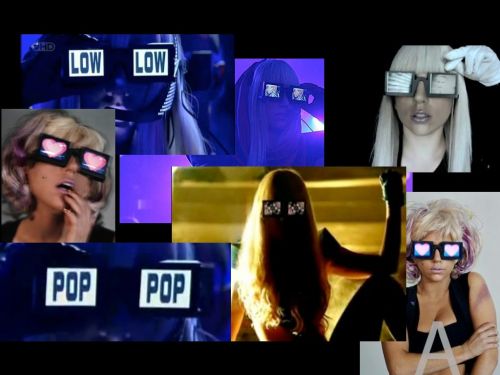
In this paper, I wish to explore (from a primarily media-theoretical perspective) how concepts of nonhuman agency and the distribution of human agency across networks of nonhuman objects contribute to, and help illuminate, an ongoing redefinition of celebrity personae in twenty-first century popular culture. As my central case study, I propose looking at Lady Gaga as a “serial figure”—as a persona that, not unlike figures such as Batman, Frankenstein, Dracula, or Tarzan, is serially instantiated across a variety of media, repeatedly restaged and remixed through an interplay of repetition and variation, thus embodying seriality as a plurimedial interface between trajectories of continuity and discontinuity. As with classic serial figures, whose liminal, double, or secret identities broker traffic between disparate—diegetic and extradiegetic, i.e. medial—times and spaces, so too does Lady Gaga articulate together various media (music, video, fashion, social media) and various sociocultural spheres, values, and identifications (mainstream, alternative, kitsch, pop/art, straight, queer). In this sense, Gaga may be seen to follow in the line of Elvis, David Bowie, and Madonna, among others. Setting these stars in relation to iconic fictional characters shaped by their many transitions between literature, film, radio, television, and digital media promises to shed light on the changing medial contours of contemporary popularity—especially when we consider the formal properties that enable serial figures’ longevity and flexibility: above all, their firm iconic grounding in networks of nonhuman objects (capes, masks, fangs, neckbolts, etc.) and their ontological vacillations between the human and the nonhuman (the animal, the technical, or the monstrous). Serial figures define a nexus of seriality and mediality, and by straddling the divide between medial “inside” and “outside” (e.g. between diegesis and framing medium, fiction and the “real world”), they are able to track media transformations over time and offer up images of the interconnected processes of medial and cultural change. This ability is grounded, then, in the inherent “queerness” of serial figures—the queer duplicity of their diegetic identities, of their extra- and intermedial proliferations, and of the networks of objects that define them. Lady Gaga transforms this queerness from a medial condition into an explicit ideology, one which sits uneasily between the mainstream and the exceptional, and she does so on the basis of a network of queer nonhuman objects—disco sticks, disco gloves, iPod LCD glasses, etc.—that alternate between (anthropocentrically defined) functionality and a sheer ornamentality of the object, in the process destabilizing the agency of the individual star and dispersing it amongst a network of nonhuman agencies. As an object-oriented serial figure, I propose, Lady Gaga may be an image of our contemporary convergence culture itself.

Cultural and Media Theory: Media in Transition

Course description for a seminar I’ll be teaching in the summer semester (April – July 2012):

Cultural and Media Theory: Media in Transition

SE 2: Di 10:00/12:00 Raum: 1502.615, Beginn: 10.04.2012

Veranstalter/in: Denson

AmerA; AAS1.2

With regard to the structural roles and relations of media in virtually every aspect of our lives, ours is an era of significant — perhaps even fundamental — change. Digital media, in particular, have transformed entertainment, social interaction, politics, art, and academia, among other areas of human activity. About that, there is widespread agreement; there is little consensus, though, when it comes to assessing the significance of these changes or determining their exact nature. Does “media convergence” characterize something unique about our culture? What is new about “new media”? To begin answering these questions, we must take a broader look at the history of media and media change. In this course, we will therefore focus not only on contemporary media phenomena, but also on a variety of earlier media transformations and transitions in an effort to better understand our present situation. With a primary emphasis on American (popular) culture, but with an eye towards global changes, we will consider moments of change and transition in a wide range of media, including the book, the cinema, recorded music, and television. Please be aware that this is an intensive theory course; there will be a heavy workload in terms of reading assignments, comprising quite a number of difficult theoretical texts. Please enroll only if you are willing to do the readings and participate actively in theoretical discussions.

Required Reading

Please purchase a copy of the following book prior to the beginning of the course: David Thorburn and Henry Jenkins, eds. Rethinking Media Change: The Aesthetics of Transition. Cambridge, Mass.: MIT Press, 2003. (ISBN: 0262701073). Please read Chapter 1, “Introduction: Toward an Aesthetics of Transition,” and be prepared to discuss it on the first day of class!

Recommended Reading

n/a

Assessment Tasks – will be specified ● Registration – StudIP 1.3.2012 – 31.3.2012 ● Size restriction – 25 ● Prerequisites – Studienleistung(en) of “Intermediate Literature and Culture” ● Studiengänge – FüB.A., M Ed. LG, 3. Fach LG, MA AAS ● Further Information – shane.denson@engsem.~

Independent Study: Digital Media and Humanities Research

Course description for an independent studies course I’ll be teaching in the summer semester (April – July 2012):

Independent Study: Digital Media and Humanities Research

SE 2: nach Vereinbarung

Veranstalter/in: Denson

AAS6

This course is designed to accompany the seminar “Cultural and Media Theory: Media in Transition,” but it is open to all students in the Master of Advanced Anglophone Studies program for fulfillment of the “Independent Studies” module. Students in the course will investigate the impact and relevance of digital media for contemporary humanities research (including studies of literature, popular culture, film and other media). Beyond conducting a theoretical inquiry, however, we will be concerned with learning to use and evaluate the techniques, tools, and methods implemented in the “digital humanities” (DH) and related areas of academic research. Thus, we will experiment with applications for textual analysis, data visualization, digital video editing, social media, and blogs, to name a few, and put them to work in academic projects. Together, students will agree on a forum for the joint presentation of their work and organize a concluding event.

Students interested in participating should start familiarizing themselves with online discussions of “digital humanities” and looking at some of the tools used in various DH projects.

Required Reading

Please refer to the course page on StudIP.

Recommended Reading

n/a Assessment Tasks – will be specified ● Registration – StudIP 1.3.2012 – 31.3.2012 ● Size restriction – 25 ● Prerequisites – none ● Studiengänge – MA AAS ● Further Information – shane.denson@engsem.~

(image by nicomachus, created via www.wordle.net for http://nicomachus.net/2011/01/digital-humanities-blog-carnival-vol-1-issue-1/)

Techno-Phenomenology and TV

Recently I posted about a paper of mine coming out in the open-access journal Phenomenology & Practice, entitled “Faith in Technology: Televangelism and the Mediation of Immediate Experience.” Now, my article, along with the new issue of P & P, has gone online (the entire contents can be found here), and I hope that you’ll take a look.

Anyway, as I mentioned a couple of weeks ago, I think that the “techno-phenomenological” approach I have taken towards the topic of televangelism may also be adaptable to fictional narrative television, and that it might thus provide a complement to — not a replacement for — more traditional (narratological-formal and industrial-social-contextual) approaches to television studies. This remains to be seen, of course, and I look forward to hearing your comments on the text itself and on the prospects of adapting its methodology to other sorts of projects.

Incidentally, though, since the time of suggesting that such adaptation might be possible, it has occurred to me that I once undertook a very cursory attempt at doing just that: in a very short essay, entitled “Techno-Habitats and Media Habits: Reflections on Contemporary Children’s Television” (originally published in Philament 12), I implicitly assumed a techno-phenomenological approach to young children’s TV shows like Teletubbies, Bob the Builder, or Lunar Jim. That paper, roughly contemporary with my initial work on the televangelism paper, just sketched out some ideas, presenting them in a literally essayistic manner, while the theoretical and methodological underpinnings were not explored. Now, with the publication of the televangelism paper, the methodology in particular has become available for inspection (the deeper theoretical implications, on the other hand, remain buried in the media-philosophical Part Two of my dissertation, Postnaturalism: Frankenstein, Film, and the Anthropotechnical Interface). So please take a look and let me know what you think about the prospects for a techno-phenomenological form of television studies.

Popular Seriality

Just a quick reminder that the theme week on “Popular Seriality” is underway over at In Media Res. The first two posts are up, and there’s been some lively discussion. So check it out and spread the word!

Here, again, is the lineup of presenters/curators for the week, along with our titles:

Monday, Dec 12Frank Kelleter
“That Soothing Balm of Latent Discontent: MAD MEN Unstresses the 21st Century”
 
Tuesday, Dec 13Shane Denson and Ruth Mayer
“Plurimediality and the Serial Figure”
 
Wednesday, Dec 14Jason Mittell
“Serial Characterization and Inferred Interiority”
 
Thursday, Dec 15Andreas Jahn-Sudmann
“TV Series, Metaseriality and the Very Special Episode”
 
Friday, Dec 16Daniel Stein
“Authorizing Alternative Authorships: The Popular Serialities of Superhero Blockbuster Spoofs”

Transnational Perspectives on Graphic Narratives: Comics at the Crossroads

[UPDATE March 28, 2013: The book is now available; see here for more info]

[Update: our publisher, Continuum, now has an official announcement, complete with table of contents: here.]

I am excited to announce Transnational Perspectives on Graphic Narratives: Comics at the Crossroads, an essay collection co-edited by Daniel Stein, Christina Meyer, and myself, which is now officially under contract with Continuum, an international publisher with a strong comics program (you can browse some of their graphic narrative-related titles here). We hope to see the volume appear in 2012; more info will follow before then, but in the meantime here is a short abstract for the collection:

Transnational Approaches to Graphic Narratives: Comics at the Crossroads

Editors: Shane Denson, Christina Meyer, and Daniel Stein

Scholarship on graphic narratives has rarely looked beyond the confines of national borders. While a growing body of studies has turned to different national traditions (Anglo-American comics, Franco-Belgian bande dessinée, Japanese manga, etc.), most critics still treat graphic narratives from different cultures as relatively self-contained phenomena. In fact, scholarship in the emerging field of Comics Studies offers very little analysis of what Shelly Fisher Fishkin has called “the broad array of cultural crossroads shaping the work of border-crossing authors, artists, and cultural forms that straddle multiple regional and national traditions.” (“Crossroads of Cultures: The Transnational Turn in American Studies—Presidential Address to the American Studies Association, November 12, 2004,” American Quarterly 57.1 (2005): 32.)

The overall aim of this collection is to close the gaps in (at least) two major fields of research: 1) in American Studies, broadly defined, where graphic narratives are increasingly accepted as a hybrid, visual-verbal literature that is worthy of critical analysis but where they are frequently placed in an exclusively American context despite the opening of the field towards transcultural and transnational research; and 2) in Comics Studies, which is currently one of the liveliest and most dynamic young fields of critical inquiry but which has, by and large, marginalized the transcultural and transnational dimensions of graphic narratives.

The essays in this collection read graphic narratives as texts that are virtually predisposed towards crossing cultural and national boundaries because their unique visual-verbal interface translates more readily – though not without transformative distortions – across cultures than mono-medial forms of literature, non-narrative artworks, and even film. Our understanding of these texts and their history thus foregrounds the transnational flux of authors and graphic styles as well as the transcultural work that individual works and genres have performed for more than a century. As Paul Williams and James Lyons write: “There are good reasons to understand North American comics in a transnational context: the institutional transaction of texts, creators, and capital across national borders has contributed to observable productive tensions in the comic texts themselves.” (The Rise of the American Comics Artist: Creators and Contexts, Jackson: UP of Mississippi, 2010, xiii.) Following this challenge to consider the transnational exchange of creative energies and their transcultural effects, the first aim which all of the essays in our collection pursue is to engage in the study of American graphic narratives as texts that question and potentially transcend the ideological limitations of national borders.

A second aim of this volume is to situate American graphic narratives in a truly interdisciplinary space in which literary studies, cultural studies, media studies, as well as political and sociological approaches may contribute to redefining the fields of American literature as a truly transnational field of inquiry in which graphic narratives are a major, and increasingly prominent, element. Instead of following uni-directional approaches, all of the essays in this volume follow a notion of multi-directional relationality that has shaped the field of American graphic narratives from its inception (from Japanese woodcuts to early American newspaper comics; from the Eastern European origins of Superman’s inventors to the British authors and artists drawing most contemporary superhero characters) and that has always been at the center of this inherently transcultural and transnational literature.

“Popular Seriality” Theme Week at In Media Res

In the week of December 12-16, 2011, members of the DFG Research Unit “Popular Seriality — Aesthetics and Practice” will be organizing a theme week, itself entitled “Popular Seriality,” over at In Media Res. Each day’s contribution, consisting of a video clip of up to three minutes accompanied by a short essay of 300-350 words, is designed to serve as a conversation starter aimed at involving a broad audience in discussion of key topics relating to our current research.

To participate in the discussion, you will need to register beforehand at In Media Res. (Registration is simple, but it can sometimes take a while for user accounts to be generated, so it is recommended that you register early.)

Here is the lineup of presenters/curators for the theme week, along with our tentative titles:

Monday, Dec 12: Frank Kelleter
“That Soothing Balm of Latent Discontent: MAD MEN Unstresses the 21st Century”
 
Tuesday, Dec 13: Shane Denson and Ruth Mayer
“Plurimediality and the Serial Figure”
 
Wednesday, Dec 14: Jason Mittell
“Serial Characterization and Inferred Interiority”
 
Thursday, Dec 15: Andreas Jahn-Sudmann
“TV Series, Metaseriality and the Very Special Episode”
 
Friday, Dec 16: Daniel Stein
“Authorizing Alternative Authorships: The Popular Serialities of Superhero Blockbuster Spoofs”