Chroma Glitch: Carolyn Kane at Digital Aesthetics Workshop

kane_chroma-glitch

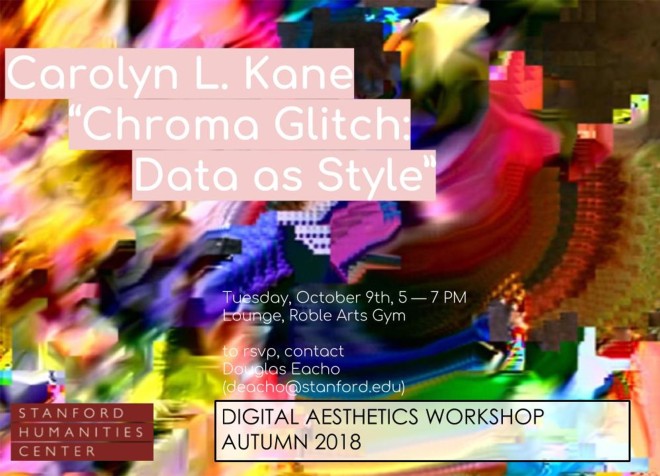
The Digital Aesthetics Workshop at the Stanford Humanities Center is entering its second year, and we are pleased to announce the first event: Carolyn L. Kane will share some of her current research with us, under the title Chroma Glitch: Data as Style. The discussion will encompass Takeshi Murata, Ryan Trecartin, and datamoshing, all within Kane’s broader project, tentatively titled Precarious Beauty: Glitch, Noise, and Aesthetic Failure. There will be a paper pre-circulated ahead of the talk; we will pass it along a week ahead of the event. We are thrilled Dr. Kane can join us – when we first came up with this idea for a workshop, her name became a token for the sort of scholarship we would want to bring in. She will launch a year already filling up with exciting speakers and a new graduate colloquium (more on that to come).

Carolyn L. Kane is the author of the award-winning Chromatic Algorithms: Synthetic Color, Computer Art, and Aesthetics after Code (U Chicago, 2014). [You can learn more about this fascinating project through this interview in Theory, Culture & Society.] She earned her Ph.D. from New York University’s Dept. of Media, Culture, and Communication in 2011, and was awarded the Nancy L. Buc Postdoctoral Fellowship in “Aesthetics and the Question of Beauty” at Brown University in 2014. From 2011 to 2014 she taught at Hunter College; she is now Associate Professor of Communication and Design at Ryerson University in Toronto.

This event will be held from 5-7p on Tuesday, Oct 9, 2018 at the Roble Arts Gym Lounge (TAPS department). Drinks and snacks will be served. Please RSVP to Doug Eacho (email in image above) if you can, and share widely.

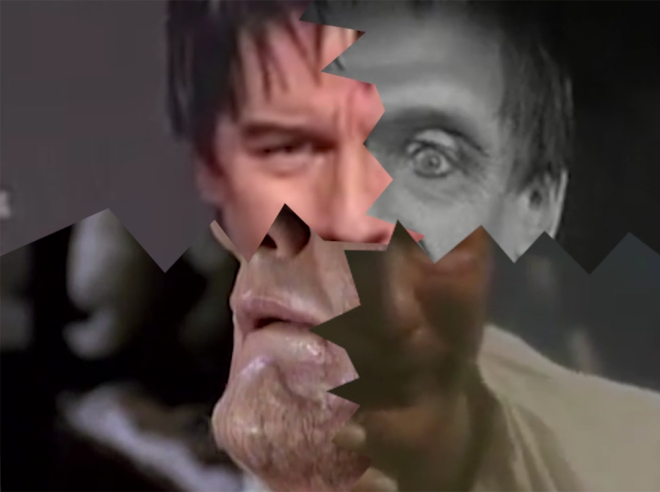
Frankenstein: 200 Years of Monsters

Screen Shot 2018-09-11 at 8.32.04 PM

Tomorrow, the third and final event on my Australia trip kicks off: Frankenstein: Two Hundred Years of Monsters, an international and interdisciplinary conference at the Australian National University and the National Film and Sound Archive in Canberra (September 12-15, 2018).

On Wednesday, Sept. 13, I will be delivering one of the keynotes, titled “Adaptation and Experimentation: Frankenstein in the Cinema and Beyond.”

More information and the complete conference schedule can be found here.

Modern Prometheus — Basel, Switzerland

Prometheus-series

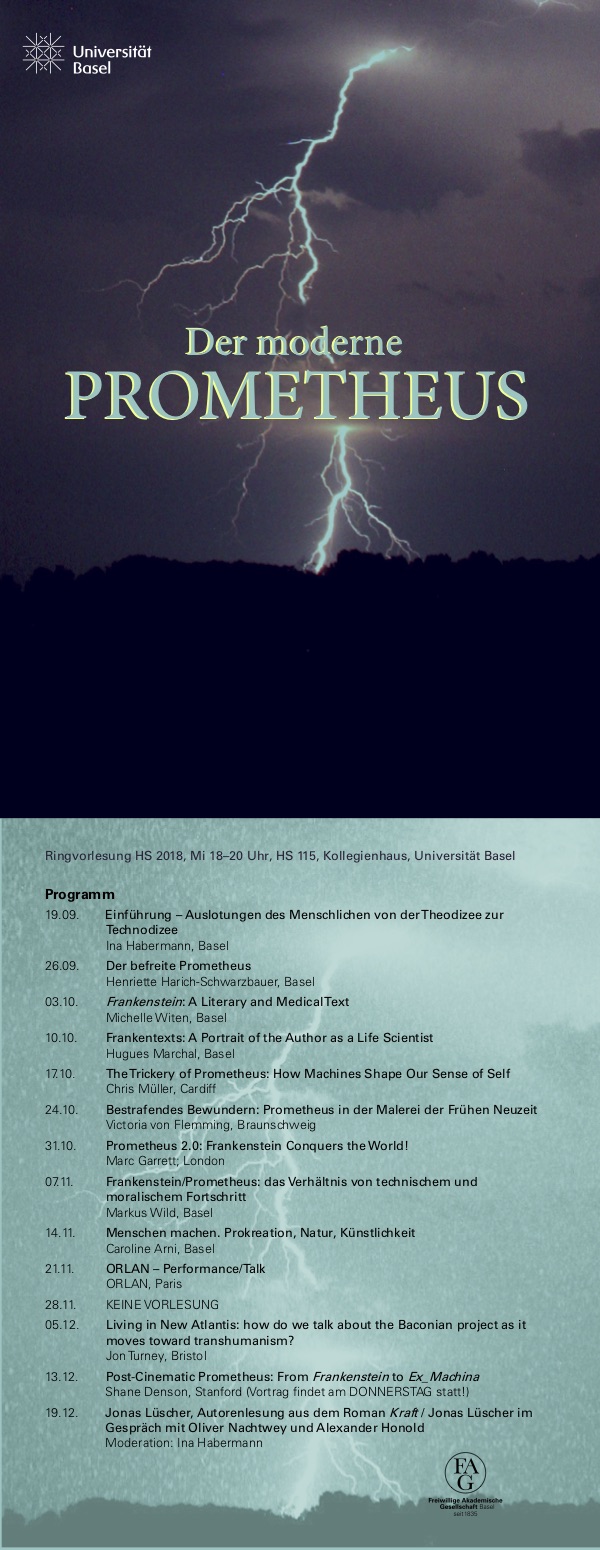
I am very happy to be a part of this great lecture series on Der moderne Prometheus/The Modern Prometheus this fall at the University of Basel. On December 13, 2018, I will present “Post-Cinematic Prometheus: From Frankenstein to Ex_Machina.” More info to follow.

FrankensteinsDeepDream

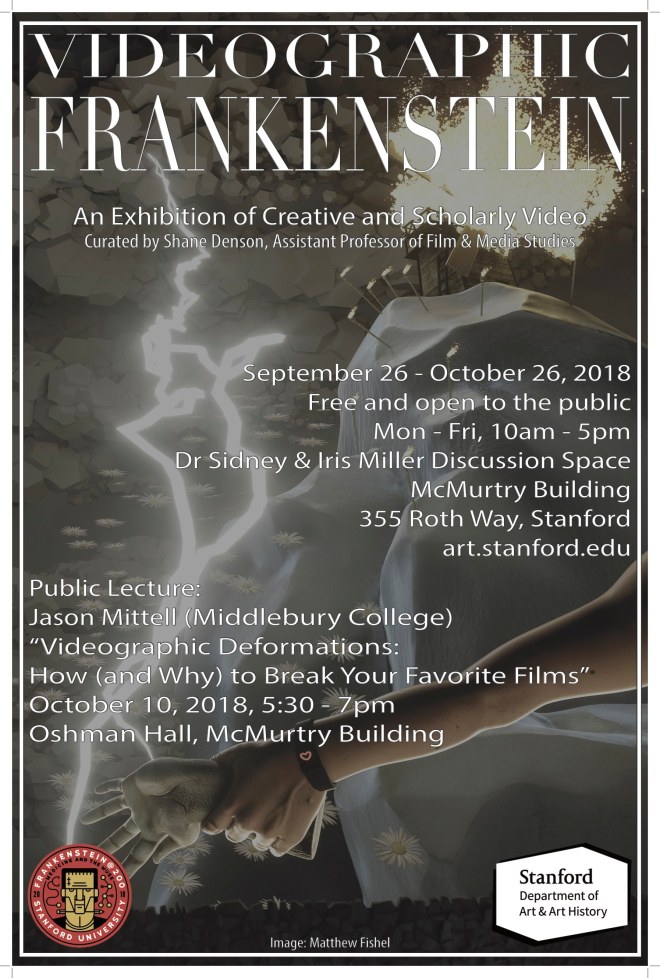
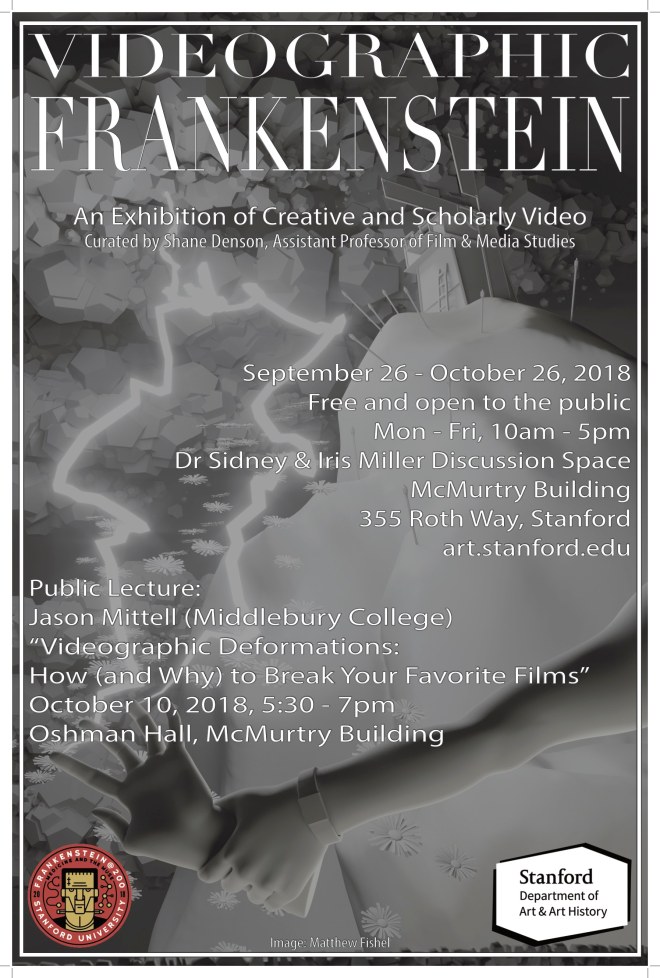
Creation scene and aftermath, as described in Mary Shelley’s Frankenstein (Chapter 5, 1831 edition) and interpreted by Cris Valenzuela’s text-to-image machine-learning demo (http://t2i.cvalenzuelab.com) utilizing AttnGAN (Attentional Generative Adversarial Networks).

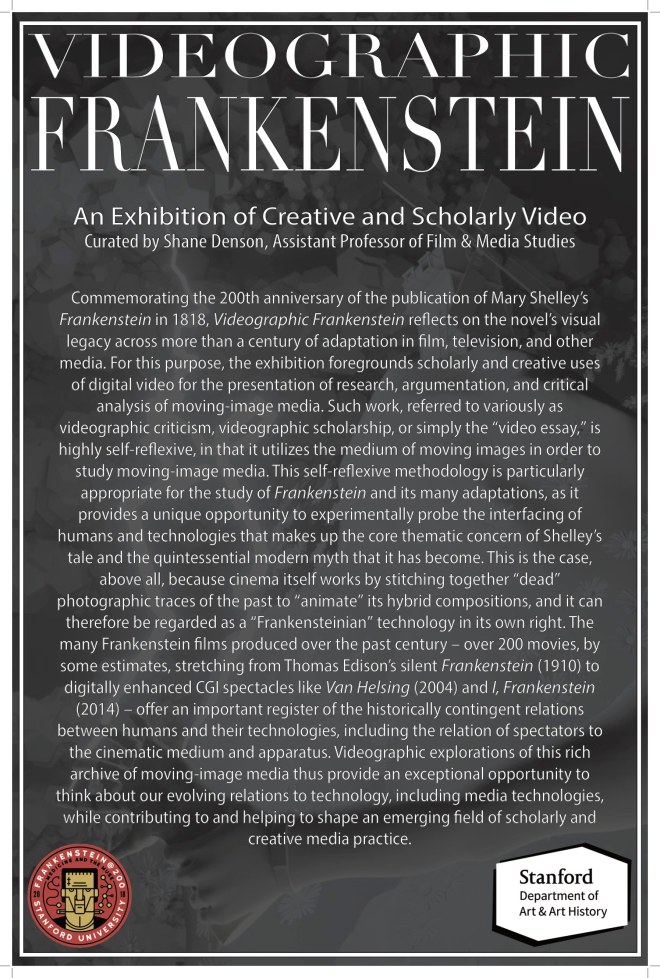
Made for the upcoming Videographic Frankenstein exhibition at the Department of Art & Art History, Stanford University (Sept. 26 – Oct. 26, 2018). More info here: https://art.stanford.edu/exhibitions/videographic-frankenstein

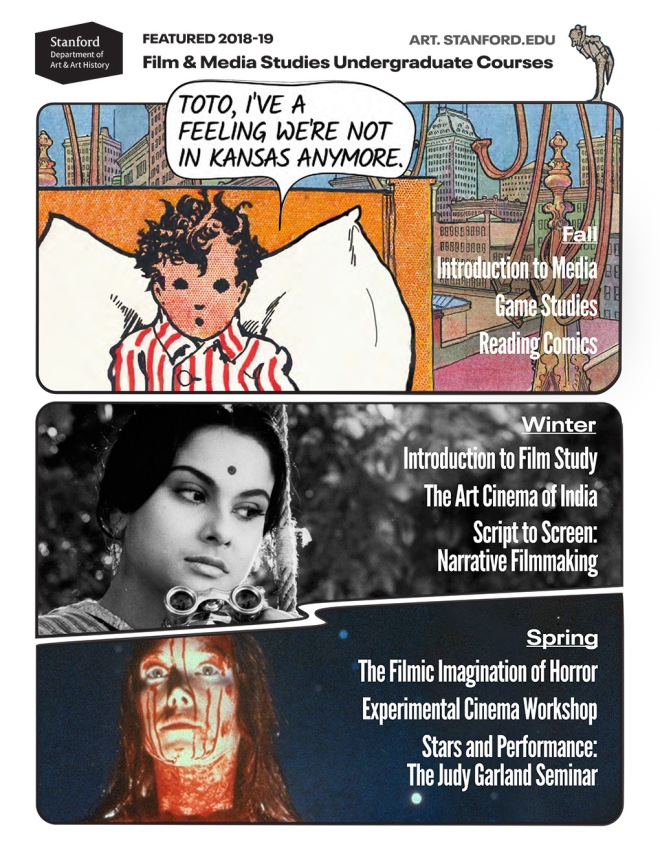
Stanford Film & Media Studies — Featured Undergraduate Courses 2018-2019

FMS-Courses-2018-2019

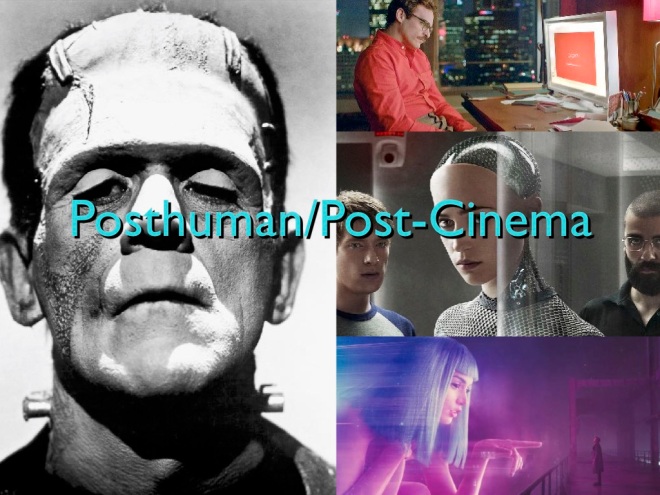
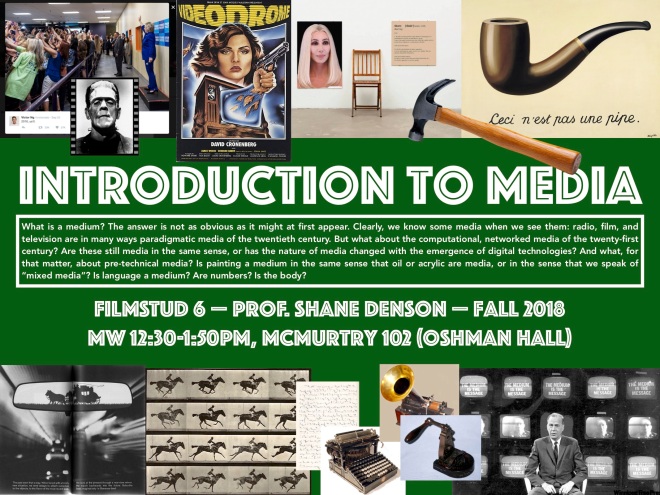
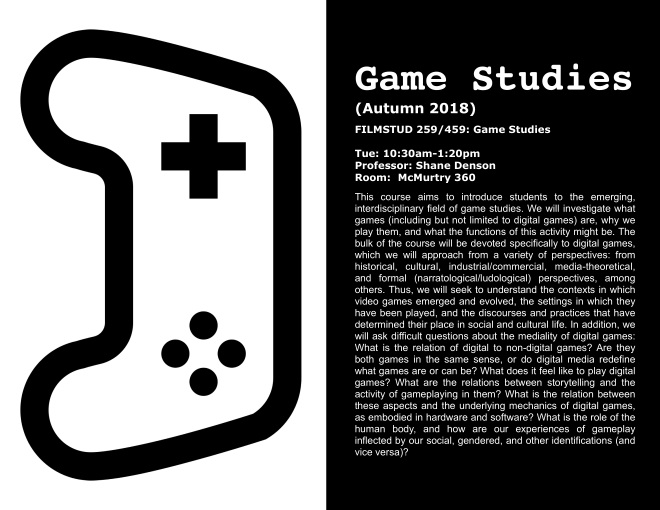
Above, some of the featured undergraduate courses in Stanford’s Film & Media Studies lineup for 2018-2019. A full listing of course offerings can be found here.

Criticism in Moving Images: The Video Essay in Theory and Practice (Sydney)

Screen Shot 2018-08-21 at 8.02.38 AM

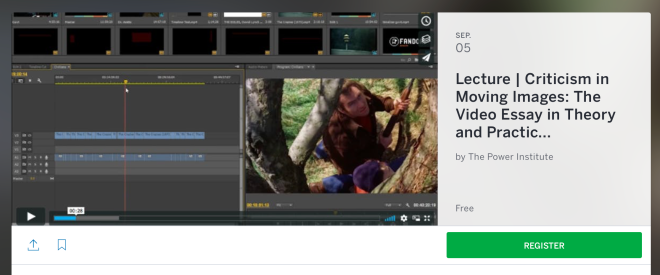
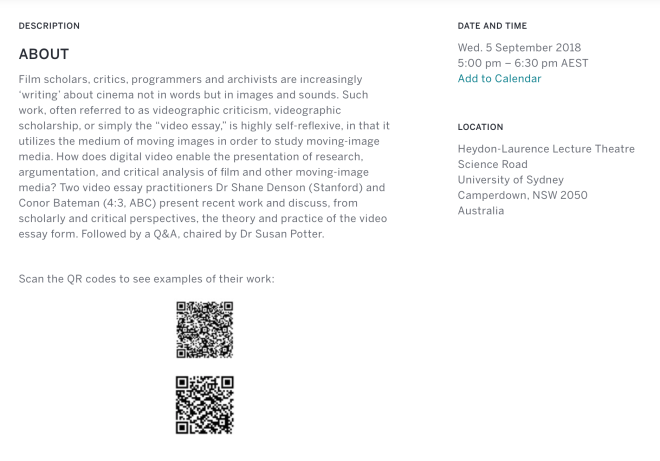
“Criticism in Moving Images: The Video Essay in Theory and Practice” is the first of three events I’ll be involved in during a trip next month to Australia. On September 5 at the Power Institute (University of Sydney), Conor Bateman and I will present and discuss videographic work in conversation with Susan Potter:

Screen Shot 2018-08-21 at 8.08.42 AM

See here for more info, and register here.

On Display: Immemory, Soft Cinema, After Video

About two years ago, the exhibition On Display: Immemory, Soft Cinema, After Video at Bilkent University in Ankara brought together projects by Chris Marker, Lev Manovich, and the contributors to the “video book” after.video — including the collaborative AR piece “Scannable Images” that Karin Denson and I made. Recently, Oliver Lerone Schultz (one of the editors of after.video) brought to my attention this “critical tour” of the exhibition, which takes the form of a discussion between Ersan Ocak and Andreas Treske. It is audio only, and you might need to turn up the volume a bit, but it’s an interesting discussion of video and media art.

(See here for more on after.video. Also, I should note that the AR on “Scannable Images” is currently not working due to the ephemeral business models of AR platforms these days, but I hope to port it over to a new platform and get it up and running again soon!)