Dominik Maeder, “Serial Interfaces: Publishing and Programming Television on Digital Platforms” #SCMS15

giphy-netflix

Here is the abstract for Dominik Maeder’s paper on the panel “Digital Seriality” at the 2015 SCMS conference in Montréal:

Serial Interfaces: Publishing and Programming Television on Digital Platforms

Dominik Maeder (University of Siegen)

Digital streaming platforms such as Netflix, Hulu, and Watchever are frequently dubbed “the future of television” due to their technical features of increased selectability, flexibility, and user-centred generation of programming flows. Few scholars, however, have actually analyzed and theorized the aesthetic forms through which these platforms arrange and organize their “content” or the operations that the websites’ interfaces enable with respect to well-established accounts of television programming.

In this paper I shall argue that digital streaming platforms not only host and influence the production processes and aesthetic forms of television series, but that these platforms themselves perform a specific kind of spatio-temporal seriality on the level of their interfaces. This seriality of interfaces can be described, following Manovich (2001), as a conceptual form that is located between narrative and database logics and that permits databases themselves to appear as potential narratives. In so far as the arrangement of content in digital platforms is also a screening of meta-data (cf. Chamberlain 2011), we may more specifically locate the interfaces’ seriality as a result of the automated observation and algorithmic organization of media consumption (cf. Adelmann 2012). This algorithmic automatization, as will be demonstrated with regard to Netflix’s House of Cards, lends itself to a phantasm of the non-human production of the “new” and thereby closely connects to a very modernistic conception of industrial seriality.

Bibliography:

Adelmann, Ralf. “‘There is no correct way to use the system.’ Das doppelte Subjekt in Datenbanklogiken.” Sortieren, Sammeln, Suchen, Spielen. Die Datenbank als mediale Praxis. Eds. Stefan Böhme, Rolf F. Nohr, and Serjoscha Wiemer. Münster: LIT, 2012. 253-268.

Chamberlain, Daniel. “Scripted Spaces: Television Interfaces and the Non-Places of Asynchronous Entertainment.” Television as Digital Media. Eds. James Bennett and Niki Strange. Durham and London: Duke University Press, 2011. 230-254.

Manovich, Lev. The Language of New Media. Cambridge: MIT, 2001.


Author Bio:

Dominik Maeder (M.A.) is a research assistant in Media Studies at the University of Siegen (Germany). He is writing a PhD thesis on Televisual Governmentality and has published several papers on the aesthetics of TV series, reality TV, and transmedia television.

Daniela Wentz, “The Infinite Gesture: The Serial Culture of the Gif” #SCMS15

giphy-brando

Here is the abstract for Daniela Wentz’s paper on the panel “Digital Seriality” at the 2015 SCMS conference in Montréal:

The Infinite Gesture: The Serial Culture of the Gif

Daniela Wentz (Bauhaus University)

The looping digital moving image format of the animated gif enjoys an extremely high level of popularity at present within (digital) media culture. Although gifs are one of the oldest image formats on the web, they have established themselves as a dominant part of the aesthetics and image practices of today’s networked media. At the same time, these images challenge the conceptual frameworks within which we understand moving images, demanding in particular that they be accounted for in terms of a robust and multifacted notion of seriality.

This paper addresses the multiple dimensions in which seriality is crucial for the logics and functions of animated gifs: firstly, their occurrence as loops, repeating the same gesture or facial expression ad infinitum; secondly, the part they play in the production and spread of memes, which circulate on social networks and other platforms; and thirdly, their assemblage into “supercut” videos, fan-produced compilation videos that strive to collect a comprehensive set of recurring actions, phrases, camera angles, or other elements into a single montage. Memes are themselves processes which are based in a thoroughly serial processuality, in processes of coupling, doubling, replication, repetition, imitation, and more or less independent distribution (Shifman 2014). Supercut videos, for their part, can be understood as analytical tools to reveal patterns and notorious clichés also far beyond the borders of Internet culture. Serial repetition thus represents the heart of the aesthetic and analytical potential of the animated gif, as well as the larger media ecology of which it is a part; accordingly, these mechanisms of serialization must be taken into account in any analysis of the basic characteristics of networked, digital media.

Bibliography:

Fuller, Matthew: Media Ecologies: Materialist Energies in Art and Technoculture. Cambridge, Mass. and London: The MIT Press, 2007.

Hagman, Hampus: “The Digital Gesture: Rediscovering Cinematic Movement through Gifs.” Refractory 21 (2012), Special Issue on “Digital Cartography: Screening Space”: http://refractory.unimelb.edu.au/2012/12/29/hagman/ 6/9, 2012.

Shifman, Limor: Memes in Digital Culture. Cambridge, Mass. and London: The MIT Press, 2014.


Author Bio:

Daniela Wentz is a researcher and lecturer at the “Internationales Kolleg für Kulturtechnikforschung und Medienphilosophie (IKKM), Bauhaus-University Weimar. Her main fields of research are media philosophy, seriality, diagrammatics, and television studies. She is the author of Bilderfolgen: Diagrammatologie der Fernsehserie (Fink, forthcoming 2015) and co-editor of a special issue of Zeitschrift für Medienwissenschaft on “The Series.”

Out Now: Serialization in Popular Culture

serialization in pop culture

Just back from a trip abroad, I was happy to find this in the mailbox: my copy of Serialization in Popular Culture, edited by Rob Allen and Thijs van den Berg. The volume goes back to an excellent conference that took place in Amsterdam in 2011, organized by the editors of the book, where I presented a paper on film serials of the 1910s: “Rethinking the Serial-Queen Melodrama: Serial Narration and Medial Self-Reflexivity in Transitional-Era Cinema.” Now much expanded, my paper appears here as “The Logic of the Line Segment: Continuity and Discontinuity in the Serial-Queen Melodrama.” The book contains a number of wonderful contributions by Mark W. Turner, Joyce Goggin, Dan Hassler-Forest, Sean O’Sullivan, Jason Dittmer, and more:

TOC-Serialization-in-pop-culture-1

TOC-Serialization-in-pop-culture-2

Also, I’ve posted this before, but I can’t resist posting once more my colleague and collaborator Ruth Mayer’s high praise for the volume:

“This collection presents an ambitious and original intervention in the field of seriality studies. It captures the workings of serialization as a core principle of modernity by taking stock of a wide range of medial formats and narrative and non-narrative configurations from the nineteenth century to the present time.” – Ruth Mayer, University of Hanover, Germany

Finally, the book is, unfortunately, quite expensive in the hardcover version that is now available, and it is to be hoped that a paperback edition will appear at some point. In the meantime, if you are in a position to do so, please request a university library or other institution to order a copy, and in this way support the editors and contributors and increase the chances for an affordable paperback/ebook edition.

CFP: Digital Seriality — Special Issue of Eludamos: Journal for Computer Game Culture

Digital_Seriality.003a

I am pleased to announce that my colleague Andreas Jahn-Sudmann and I will be co-editing a special issue of Eludamos: Journal for Computer Game Culture on the topic of “Digital Seriality.” Here, you’ll find the call for papers (alternatively, you can download a PDF version here). Please circulate widely!

Call for Papers: Digital Seriality

Special Issue of Eludamos: Journal for Computer Game Culture (2014)
Edited by Shane Denson & Andreas Jahn-Sudmann

According to German media theorist Jens Schröter, the analog/digital divide is the “key media-historical and media-theoretical distinction of the second half of the twentieth century” (Schröter 2004:9, our translation). And while this assessment is widely accepted as a relatively uncontroversial account of the most significant media transformation in recent history, the task of evaluating the distinction’s inherent epistemological problems is all the more fraught with difficulty (see Hagen 2002, Pias 2003, Schröter 2004). Be that as it may, since the 1990s at the latest, virtually any attempt to address the cultural and material specificity of contemporary media culture has inevitably entailed some sort of (implicit or explicit) evaluation of this key distinction’s historical significance, thus giving rise to characterizations of the analog/digital divide as caesura, upheaval, or even revolution (Glaubitz et al. 2011). Seen through the lens of such theoretical histories, the technical and especially visual media that shaped the nineteenth and twentieth centuries (photography, film, television) typically appear today as the objects of contemporary digitization processes, i.e. as visible manifestations (or remnants) of a historical transition from an analog (or industrial) to a digital era (Freyermuth and Gotto 2013). Conversely, despite its analog pre-history today’s digital computer has primarily been addressed as the medium of such digitization processes – or, in another famous account, as the end point of media history itself (Kittler 1986).

The case of digital games (as a software medium) is similar to that of the computer as a hardware medium: although the differences and similarities between digital games and older media were widely discussed in the context of the so-called narratology-versus-ludology debate (Eskelinen 2001; Juul 2001; Murray 1997, 2004; Ryan 2006), only marginal attention was paid in these debates to the media-historical significance of the analog/digital distinction itself. Moreover, many game scholars have tended to ontologize the computer game to a certain extent and to treat it as a central form or expression of digital culture, rather than tracing its complex historical emergence and its role in brokering the transition from analog to digital (significant exceptions like Pias 2002 notwithstanding). Other media-historiographical approaches, like Bolter and Grusin’s concept of remediation (1999), allow us to situate the digital game within a more capacious history of popular-technical media, but such accounts relate primarily to the representational rather than the operative level of the game, so that the digital game’s “ergodic” form (Aarseth 1999) remains largely unconsidered.

Against this background, we would like to suggest an alternative angle from which to situate and theorize the digital game as part of a larger media history (and a broader media ecology), an approach that attends to both the representational level of visible surfaces/interfaces and the operative level of code and algorithmic form: Our suggestion is to look at forms and processes of seriality/serialization as they manifest themselves in digital games and gaming cultures, and to focus on these phenomena as a means to understand both the continuities and the discontinuities that mark the transition from analog to digital media forms and our ludic engagements with them. Ultimately, we propose, the computer game simultaneously occupies a place in a long history of popular seriality (which stretches from pre-digital serial literature, film, radio, and television, to contemporary transmedia franchises) while it also instantiates novel forms of a specifically digital type of seriality (cf. Denson and Jahn-Sudmann 2013). By grappling with the formal commensurabilities and differences that characterize digital games’ relations to pre-digital (and non-ludic) forms of medial seriality, we therefore hope to contribute also to a more nuanced account of the historical process (rather than event) of the analog/digital divide’s emergence.

Overall, seriality is a central and multifaceted but largely neglected dimension of popular computer and video games. Seriality is a factor not only in explicitly marked game series (with their sequels, prequels, remakes, and other types of continuation), but also within games themselves (e.g. in their formal-structural constitution as an iterative series of levels, worlds, or missions). Serial forms of variation and repetition also appear in the transmedial relations between games and other media (e.g. expansive serializations of narrative worlds across the media of comics, film, television, and games, etc.). Additionally, we can grasp the relevance of games as a paradigm example of digital seriality when we think of the ways in which the technical conditions of the digital challenge the temporal procedures and developmental logics of the analog era, e.g. because once successively appearing series installments are increasingly available for immediate, repeated, and non-linear forms of consumption. And while this media logic of the database (cf. Manovich 2001: 218) can be seen to transform all serial media forms in our current age of digitization and media convergence, a careful study of the interplay between real-time interaction and serialization in digital games promises to shed light on the larger media-aesthetic questions of the transition to a digital media environment. Finally, digital games are not only symptoms and expressions of this transition, but also agents in the larger networks through which it has been navigated and negotiated; serial forms, which inherently track the processes of temporal and historical change as they unfold over time, have been central to this media-cultural undertaking (for similar perspectives on seriality in a variety of media, cf. Beil et al. 2013, Denson and Mayer 2012, Jahn-Sudmann and Kelleter 2012, Kelleter 2012, Mayer 2013).

To better understand the cultural forms and affective dimensions of what we have called digital games’ serial interfacings and the collective serializations of digital gaming cultures (cf. Denson and Jahn-Sudmann 2013), and in order to make sense of the historical and formal relations of seriality to the emergence and negotiation of the analog/digital divide, we seek contributions for a special issue of Eludamos: Journal of Computer Game Culture on all aspects of game-related seriality from a wide variety of perspectives, including media-philosophical, media-archeological, and cultural-theoretical approaches, among others. We are especially interested in papers that address the relations between seriality, temporality, and digitality in their formal and affective dimensions.

Possible topics include, but are not limited to:

  • Seriality as a conceptual framework for studying digital games
  • Methodologies and theoretical frameworks for studying digital seriality
  • The (im)materiality of digital seriality
  • Digital serialities beyond games
  • The production culture of digital seriality
  • Intra-ludic seriality: add-ons, levels, game engines, etc.
  • Inter-ludic seriality: sequels, prequels, remakes
  • Para-ludic seriality: serialities across media boundaries
  • Digital games and the limits of seriality

******************************************************************************

Paper proposals (comprising a 350-500 word abstract, 3-5 bibliographic sources, and a 100-word bio) should be sent via e-mail by March 1, 2014 to the editors:

  • a.sudmann[at]fu-berlin.de
  • shane.denson[at]engsem.uni-hannover.de

Papers will be due July 15, 2014 and will appear in the fall 2014 issue of Eludamos.

*******************************************************************************

References:

Aarseth, Espen. 1999. “Aporia and Epiphany in Doom and The Speaking Clock: The Temporality of Ergodic Art.” In Marie-Laure Ryan, ed. Cyberspace Textuality: Computer Technology and Literary Theory. Bloomington: Indiana University Press, 31–41.

Beil, Benjamin, Lorenz Engell, Jens Schröter, Daniela Wentz, and Herbert Schwaab. 2012. “Die Serie. Einleitung in den Schwerpunkt.” Zeitschrift Für Medienwissenschaft 2 (7): 10–16.

Bolter, J. David, and Richard A, Grusin. 1999. Remediation: Understanding New Media. Cambridge, Mass.: MIT Press.

Denson, Shane, and Andreas Jahn-Sudmann. “Digital Seriality: On the Serial Aesthetics and Practice of Digital Games.” Eludamos. Journal for Computer Game Culture 1 (7): 1-32. http://www.eludamos.org/index.php/eludamos/article/view/vol7no1-1/7-1-1-html.

Denson, Shane, and Ruth Mayer. 2012. “Grenzgänger: Serielle Figuren im Medienwechsel.” In Frank Kelleter, ed. Populäre Serialität: Narration – Evolution – Distinktion. Zum seriellen Erzählen seit dem 19. Jahrhundert. Bielefeld: Transcript, 185-203.

Eskelinen, Markku. 2001. “The Gaming Situation” 1 (1). http://www.gamestudies.org/0101/eskelinen/.

Freyermuth, Gundolf S., and Lisa Gotto, eds. 2012. Bildwerte: Visualität in der digitalen Medienkultur. Bielefeld: Transcript.

Glaubitz, Nicola, Henning Groscurth, Katja Hoffmann, Jörgen Schäfer, Jens Schröter, Gregor Schwering, and Jochen Venus. 2011. Eine Theorie der Medienumbrüche. Vol. 185/186. Massenmedien und Kommunikation. Siegen: Universitätsverlag Siegen.

Hagen, Wolfgang. 2002. “Es gibt kein ‘digitales Bild’: Eine medienepistemologische Anmerkung.” In: Lorenz Engell, Bernhard Siegert, and Joseph Vogl, eds. Archiv für Mediengeschichte Vol. 2 – “Licht und Leitung.” München: Wilhelm Fink Verlag, 103–12.

Jahn-Sudmann, Andreas, and Frank Kelleter. “Die Dynamik Serieller Überbietung: Zeitgenössische Amerikanische Fernsehserien und das Konzept des Quality TV.” In Frank Kelleter, ed. Populäre Serialität: Narration – Evolution – Distinktion. Zum seriellen Erzählen seit dem 19. Jahrhundert. Bielefeld: Transcript, 205–24.

Juul, Jesper. 2001. “Games Telling Stories? – A Brief Note on Games and Narratives.” Game Studies 1 (1). http://www.gamestudies.org/0101/juul-gts/.

Kelleter, Frank, ed. 2012. Populäre Serialität: Narration – Evolution – Distinktion: Zum seriellen Erzählen seit dem 19. Jahrhundert. Bielefeld: Transcript.

Kittler, Friedrich A. 1986. Grammophon, Film, Typewriter. Berlin: Brinkmann & Bose.

Manovich, Lev. 2001. The Language of New Media. Cambridge, Mass.: MIT Press.

Mayer, Ruth. 2013. Serial Fu Manchu: The Chinese Supervillain and the Spread of Yellow Peril Ideology. Philadelphia: Temple University Press.

Murray, Janet H. 1997. Hamlet on the Holodeck: The Future of Narrative in Cyberspace. Cambridge: MIT Press.

Murray, Janet H. 2004. “From Game-Story to Cyberdrama.” In Noah Wardrip-Fruin and Pat Harrigan, eds. First Person: New Media as Story, Performance, and Game. Cambridge, MA: MIT Press, 2-10.

Pias, Claus. 2002. Computer Spiel Welten. Zürich, Berlin: Diaphanes.

Pias, Claus. 2003. “Das digitale Bild gibt es nicht. Über das (Nicht-)Wissen der Bilder und die informatische Illusion.” Zeitenblicke 2 (1). http://www.zeitenblicke.de/2003/01/pias/.

Ryan, Marie-Laure. 2006. Avatars of Story. Minneapolis: University of Minnesota Press.

Schröter, Jens. 2004. “Analog/Digital – Opposition oder Kontinuum?” In Jens Schröter and Alexander Böhnke, eds. Analog/Digital – Opposition oder Kontinuum? Beiträge zur Theorie und Geschichte einer Unterscheidung. Bielefeld: Transcript, 7–30.

Digital Seriality

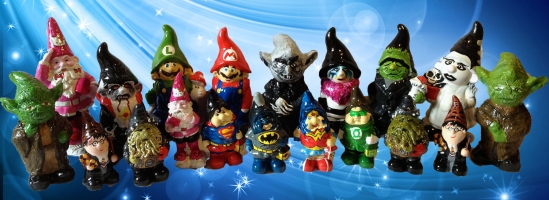
mario-luigi-pixel-gnome-2

Just in time for the holidays, a new issue of the open-access journal Eludamos: Journal for Computer Game Culture is now online. Among the articles in this issue is a piece that I co-authored with Andreas Jahn-Sudmann, called “Digital Seriality: On the Serial Aesthetics and Practice of Digital Games.” In this article we put forward some of the central ideas of our joint research project and provide illustrations of serial aesthetics and practices in games and game cultures. Here is the abstract for the paper:

In this paper we are concerned to outline a set of perspectives, methods, and theories with which to approach the seriality of digital games and game cultures – i.e. the aesthetic forms and cultural practices of game-related serialization, which we see unfolding against (and, in fact, as a privileged mediator of) the broader background of medial and socio-cultural transformations taking place in the wake of popular media culture’s digitalization. Seriality, we contend, is a central and multifaceted but largely neglected dimension of popular computer and video games. Seriality is a factor not only in explicitly marked game series (with their sequels, prequels, remakes, and other types of continuation), but also within games themselves (e.g. in their formal-structural constitution as an iterative series of “levels” or “worlds”) as well as on the level of transmedial relations between games and other media (e.g. expansive serializations of narrative worlds across the media of comics, film, television, and games, etc.). Particularly with respect to processes of temporal “collapse” or “synchronization” that, in the current age of digitization and media convergence, are challenging the temporal dimensions and developmental logics of pre-digital seriality (e.g. because once successively appearing series installments are increasingly available now for immediate, repeated, and non-linear consumption), computer games are eminently suited for an exemplary investigation of a specifically digital type of seriality.

In the following, we look at serialization processes in digital games and game series and seek to understand how they relate to digital-era transformations of temporally-serially structured experiences and identifications on the part of historically situated actors. These transformations range from the microtemporal scale of individual players’ encounters with algorithmic computation processes (the speed of which escapes direct human perception and is measurable only by technological means) all the way up to the macrotemporal (more properly “historical”) level of collective brokerings of political, cultural, and social identities in the digital age. To account for this multi-layered complexity, we argue for a decidedly interdisciplinary approach, combining media-aesthetic and media-philosophical perspectives with the resources of discourse analysis and cultural history. We approach the seriality of digital games both in terms of textual and aesthetic forms as well as in the broader context of serialized game cultures and popular culture at large.

Please take a look and spread the word about the new issue of Eludamos. We would be more than happy to hear your feedback about our article, so feel free to leave a comment here. Enjoy!

(“Pixel Gnomes” image created by Shane Denson, based on hand-painted Mario & Luigi-style garden gnomes made by Karin Denson.)

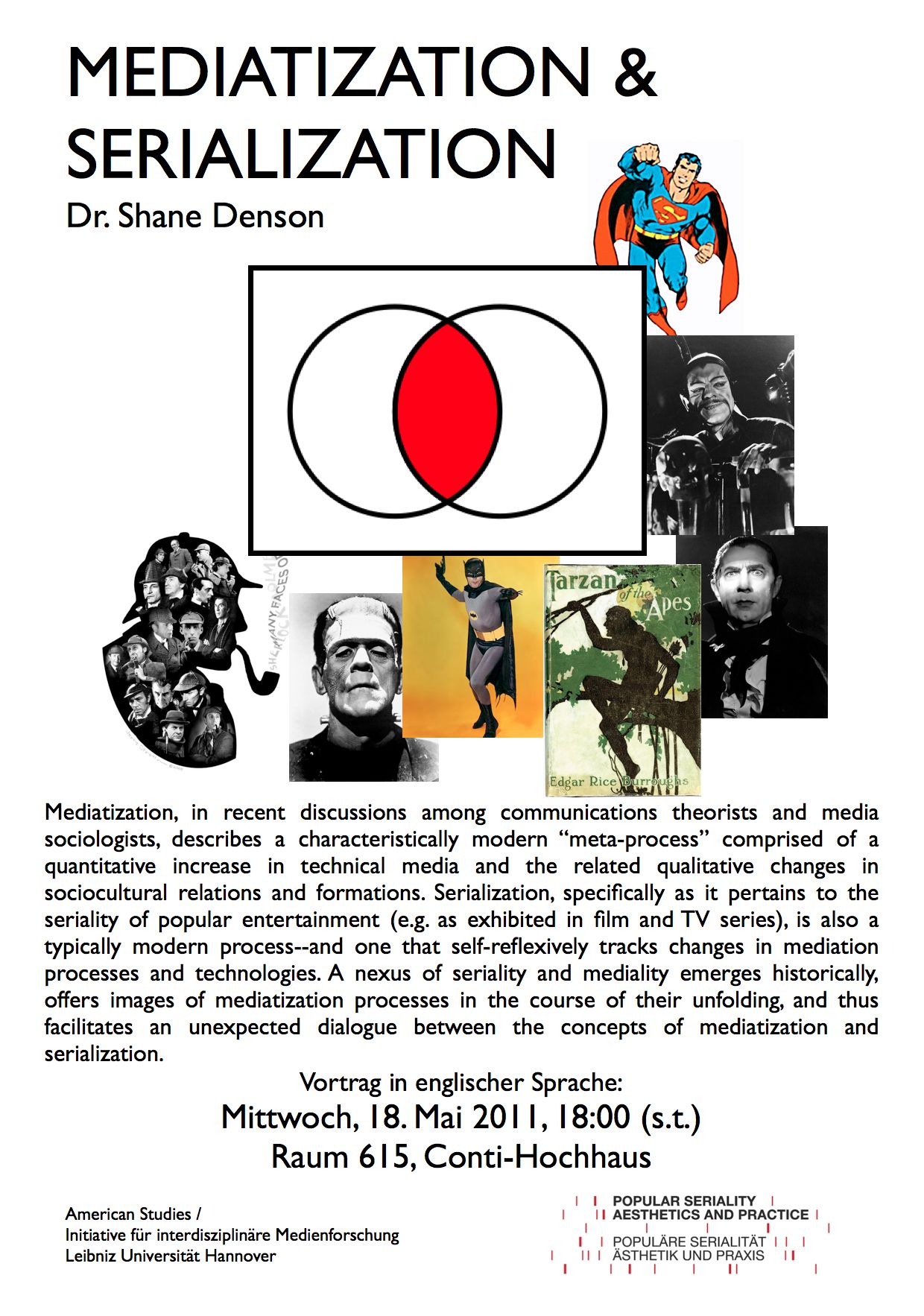
Mediatization and Serialization

mediatization and serialization_poster.001

The very first thing I posted on this blog (in May 2011) was the above flyer, announcing a talk I was giving on the connections between “mediatization” and “serialization.” While sorting through some papers, I came across the text of the talk again and realized I still haven’t gotten around to doing anything with it. In the end, I have to admit that the concept of mediatization, as defined by the media sociologists and communications theorists I discuss in the talk, doesn’t really appeal to me that much. For one thing, I am much less concerned than they are to guard against charges of technological determinism; mediatization theory often seems preoccupied with keeping the human, or the social, in control (on some general problems with this preoccupation, see McKenzie Wark’s recent essay “Against Social Determinism”). However, a large part of the theoretical appeal of the notion of mediatization — as a process of change closely linked with processes like modernization and globalization — lies in its description of an apparent loss of autonomy, a ceding of human agency to the technical. And I think there’s something to be said for this: the past two-hundred some-odd years have witnessed an explosion of technical actants, placing us in ever more complex and opaque feedback loops with them and the environment they mediate to us: welcome to the anthropocene…

So this is not my problem with mediatization theory. Rather, my problem is with the insinuation that human agency was free of the taint of media or technics some two or three hundred (or however many) years ago, and that it only gradually became “mediatized.” My own notion of postnaturalism, summed up in the Latourian paraphrase that “we have never been natural,” is based on the idea of an essential and indissoluble (though by no means static) “anthropotechnical interface” that connects human and technical agencies in a transductive relation — there simply is no human agency without technical agencies, and vice versa. Still, it is necessary to take note of the empirical changes that take place against this cosmological horizon, and perhaps the notion of mediatization can be of service in this regard after all. If we set aside the worries over determinism, that is, and train our focus at a medium level of abstraction — somewhere between the cosmological and the phenomenologically/technically concrete and individual: at the level of supra-personal but not quite geological temporality or history — perhaps then an engagement with the concept of “mediatization” can help us think through the qualitative changes in agency that have taken place with the advent of the steam press, photography, film, radio, television, and digital media.

My talk on “Mediatization & Serialization” certainly does no more than scratch the surface in this regard, but in the hopes that it at least manages to do that, I have decided to reproduce the text here. As always, I am grateful for any comments!

Mediatization & Serialization

Shane Denson

(Note: This is a rough script of the talk I held at Leibniz Universität Hannover on May 18, 2011. Bibliographical info is missing, and footnotes are just placeholders.)

[Intro]

What I hope to do is to bring the concept of mediatization, which I’ll explain shortly, into dialogue with that of serialization, especially as it pertains to the seriality of modern popular entertainment (as exhibited in film and television series, for example). Most generally, the basis for this dialogue derives from the fact that both mediatization and serialization are, or so I contend, characteristically modern processes, perhaps even central to modernity itself. Mediatization, according to the term’s usage in recent communications theory and media sociology, is related to the fact that the modern world is witness to a consistent increase in the sheer number of technical media. These, in turn, are seen to be increasingly central to the shape and structure of sociocultural reality, so that it becomes increasingly untenable to think of media as a separate institution, exerting pressure on the others from outside. Instead, the situation shifts to one in which we find genuinely “mediatized” institutions, institutions transformed by media as an increasingly integral framing structure. So it no longer makes sense to speak of “the media and education” or “the media and the family,” as in traditional mass communications studies, but instead of thoroughly mediatized education, family, and so forth. Mediatization, according to Friedrich Krotz, is a “meta-process,” not itself empirically observable but, like the meta-processes of individualization, commercialization, and globalization, marking a real trajectory in the modern world and a force that qualitatively conditions the realm of empirically observable phenomena. In some respects, this view of mediatization as a meta-process might be compared to Friedrich Kittler’s idea of “media a priori,” but (against this association) it is constantly emphasized in these discussions that mediatization is to be seen as a non-deterministic process. As for serialization, this refers, like I said, to the popular seriality that explodes onto the scene in the nineteenth century with the advent of new media technologies (like the steam press, which enabled the rapid production of printed periodicals, including story papers, penny dreadfuls, and dime novels). Since then, serialized narrative forms have continued to proliferate alongside and in the media that would seem to have changed our worlds into properly mediatized worlds: in film, radio, television, and now digital media. The serialization of entertainment cannot, it would seem, be thought in isolation from the processes described by the concept of mediatization, and serialization may be thought of as a special case of the mediatization of leisure time, specifically as relates to media-inflected transformations of popular narrative. On the other hand, though, serialization is a truly special case of mediatization, in that it is a highly self-reflexive process: serial narratives observe changes in mediation, track them over time, and thus offer images of mediatization processes as they unfold—in “real time,” so to speak. Careful attention to serialization promises therefore to shed light on mediatization—and vice versa. What I call “techno-phenomenology,” and which I will come back to shortly, will help uncover the bidirectional communication between the two processes.

[Framing mediatization through serialization]

But first, to start making these connections concrete, I turn to some ideas and observations put forward by Frank Kelleter in a recent issue of Psychologie Heute. Kelleter notes that the evolution of TV sitcoms from the 1950s to today displays a continuous movement from the intact family as the site and occasion for humor, by way of the dysfunctional units of All in the Family or Married…with Children, to more recent sitcoms that revolve around a group of unrelated friends (as in Seinfeld, Friends, or Sex and the City). As Kelleter remarks, this development can be seen as a result of, and a reflection of, the increasing individualization of modern Western societies. Individualization, you recall, is one of the central meta-processes that, according to Friedrich Krotz, define modernity, along with the interrelated meta-processes of commercialization, globalization, and mediatization. And surely we can see these other processes reflected just as clearly in the globally syndicated, made-for-profit series that dominate TV screens today. But, as Kelleter recognizes, the reflection of social reality is only the beginning, and it would be shortsighted to reduce the link between serialization and mediatization to a passive commentary function that series can assume with respect to social developments.

On the contrary, serialized television actively frames our experience of the world: the week is punctuated at regular intervals by our favorite series, and our relations at home and on the job are perceived—though not uncritically—through the lenses of television drama, sitcoms, soaps, news, and police procedurals. Just as we judge series as either realistic or unrealistic, we inevitably compare reality and the people we encounter in the “real world” with the models we have met and occasionally become intimate with in the serialized world of television. In this respect, we can speak of a relatively direct (though hardly simple[1]) link between serialization and mediatization, as the serialized entertainment of TV transformatively reframes our interpersonal relations and behavioral expectations. Moreover, this activity of framing and reframing is itself increasingly the object of serial entertainment. The serial production and distribution of still incomplete narrative constructs opens a space for what Henry Jenkins calls “participatory culture,” and new social relations are created in the feedback loops between producers and consumers—social relations that are not only transformed but in fact generated through mediatization. And the media processes upon which these novel relations depend are increasingly the topic not only of fans’ discourses with one another but also of the serial productions themselves, which in the era of so-called Quality TV are aware of the existence of a well-informed, highly networked, and hardly passive fan base. Fans know how series are structured, and series’ producers know that fans know how they’re structured, and so the series themselves become increasingly complex and self-reflexive in response. The result is that the serialized communication that takes place in the inherently mediatized networks of producers and consumers of serial forms continues to proliferate in the manner of a self-serialization that takes as its object the serial maintenance of mediatized relations and communications in and through series. (And that only approximates the complex self-reflexive processes set in motion by a series like Lost.)

But while I’ve concentrated on recent television here, the link between serialization and mediatization is much broader. A moment ago, I invoked the figure of the frame to describe the work of regularly consumed TV series in organizing and transforming our experience, and I want to extend this to serial forms in other media as well. The figure of the frame has cropped up before in discussions of mediatization, often in connection with the idea of an overarching “media logic” (as the “orientation frame” or “processual framework” that increasingly structures social action).[2] But whereas this notion of media logic raises worries of determinism and is seen by some to cast mediatization as an implausibly linear process,[3] the sort of framing I have in mind is inherently reversible, volatile, and polyvocal—expressive of the non-neutral Prägkraft or “moulding forces” that communications scholar Andreas Hepp sees at work in media, while also compatible with his call (following David Morley) for a non-media-centric media theory capable of countenancing a central paradox of mediatization: capable, namely, of accounting for the increasingly central role of media in shaping our experience without thereby attributing the central or determinative causal agency of this development to media as a unified force. Divorced from the idea of a singular, teleological media logic, the figure of the frame illustrates what I call a process of “de/centering,” which Derrida exposes in a text ostensibly about painting. As he shows, frames are never simple or singular but highly unstable and phenomenally reversible entities. On the one hand, they stand outside the work, providing a background against which the framed content can emerge as a figure. On the other hand, though, the frame becomes part of the figure when seen against the background of the wall. Oscillating between ground and figure, the frame as margin or passepartout both centers and decenters the work: it enacts the multistable logic of de/centering that I propose explains the non-passive but non-deterministic framing function of media as revealed by a techno-phenomenological take on mediatization and serialization.

[Techno-phenomenology]

Techno-phenomenology is my term for an approach developed by American philosopher Don Ihde, following leads from the early Heidegger and Merleau-Ponty, among others. Generally speaking, techno-phenomenology looks at technologies neither as passive artifacts nor as determinative global systems, but instead as constituent parts of the relations that human agents maintain with their environments in concretely embodied, practical situations. What Ihde calls “mediating technologies” may occupy a variety of positions within the intentional relations of subjects to objects. For example, when one looks through a telescope, the device itself ideally disappears; it is, so to speak, “absorbed” into the perceiving subject’s sensorial apparatus to reveal far-away objects that couldn’t be seen with the naked eye. Prosthetically extending the embodied subject, the telescope occupies what Ihde calls an “embodiment relation.” In contrast to this, a radio telescope cannot be looked through in this direct manner; instead, its output must be looked at and interpreted, “read” as a sign of an objective reality that cannot be perceived directly. This type of technology instantiates a “hermeneutic relation”—occupying a semi-objective position as something to be looked at rather than through. But it is important to note that technologies, on this view, do not inevitably and irrevocably instantiate one or the other type of relation. As Heidegger’s famous hammer illustrates, an embodiment relation can always break down. And Don Ihde goes further to illustrate that breakage is not the only source of such reversal. Decontextualization, simple inexperience, or intentional aesthetic estrangement, for example, can all cause transformation, because techno-phenomenal relations are embedded in contexts of practice, which are in turn conditioned by social and cultural forces. The fact remains, though, that a “telic inclination,” as Ihde puts it, may inhere in a technology, predisposing a given technology to certain means of use and relation and not to others. Material factors exert pressures on praxis that push optical and radio telescopes, for example, to opposite ends of the spectrum of subject-object relations, while still allowing for non-typical forms of use or appropriation.

What goes for Ihde’s “mediating technologies” applies to media in a narrower sense as well. On a very general level, for example, we might say that textual media tend, for obvious reasons, towards hermeneutic relations, while the television screen tends to be looked through, rather than at, as a quasi-transparent window on the world. These are telic inclinations of the media—differential media logics in the plural, if you like—quite comparable to the non-absolute “tendencies” or “pressures” that Hepp terms the “moulding forces” of media. These forces, looked at from a techno-phenomenological perspective, can be seen to frame the perceptual and actional agencies of media users, but never in a univocal, absolute, or determinative manner. Significantly, contextual reversals remain a live possibility, as is demonstrated by the paradigmatic difference between early and so-called classical film. In the early years of the cinema, which Tom Gunning has defined as a “cinema of attractions” (1895-1905), the cinema itself was the main attraction; people went to see projection apparatuses, not films. But the display of cinematic magic and trick effects for their own sake came to be subordinated to narration, and the classical Hollywood style, which took shape by around 1917, worked to ensure the invisibility of narrative construction, rendering the apparatus of film a transparent window onto fictional worlds. Importantly, though, narrative serialization—in the form of film serials such as The Perils of Pauline, The Hazards of Helen, or The Exploits of Elaine—arose in the 1910s as a means of navigating the uncertain transitional phase between the early and classical paradigms. Staging neither the pure media spectacles of early attractions-style cinema nor the self-enclosed diegetic universes of classical film, these serialized story films vacillated between medial transparency and opacity, between narrative closure and an openness onto the non-diegetic conditions of their storytelling—both due to the incompleteness of the weekly episodes, which were segmented by cliffhangers and interrupted by the rhythms of the work week, and due to self-reflexive tendencies by which the serials ostentatiously demonstrated the medial means of an emerging form of narrative construction.[4]

[The nexus]

This brings me to the nexus that, as I see it, binds popular seriality and mediality. By mediality, I mean the fact and specific character or quality of a given process of mediation. Roger Hagedorn points to a special relation between seriality and mediality when he observes that serial narratives often “serve to promote the medium in which they appear” (5). Medial self-reflexivity is, then, in a sense a natural facet of the serial form’s role in helping “to develop the commercial exploitation of a specific medium” (5). The serialized novels of the nineteenth century feuilleton helped sell newspapers, and color comic strips advertised newly developed four-color printing processes. Early radio and television series served to attract consumers to the new media, to induce them to purchase expensive devices, and then to hook them with ongoing stories and recurring entertainments. Popular seriality is thus closely linked with the development of modern media, or with a media modernity characterized by constant pressure towards media-technological innovation. Serialization is correlated, that is, with the quantitative and qualitative changes which lay the very groundwork for the meta-process of mediatization. Concerned with their own medial forms, as well as the transformation of the media landscape implied by the emergence of new, competing media, series probe, expose, demonstrate, and experiment with their own mediality and compare various media with one another; moreover, because series unfold over time, they are capable of tracking the medial processes and changes upon which the meta-process of mediatization depends or supervenes.

Especially at transitional moments of media change, a techno-phenomenological perspective on seriality reveals a privileged view of the processes that are basic to mediatization; conversely, the concept of mediatization illuminates the lower-level work of serialization in the broader perspective of modernity. For example, late nineteenth century dime novels can be approached as medially inconspicuous channels through which simple, formulaic stories of frontier heroes, urban detectives, and young inventors were told; but when we see these tales in relation to the innovations in print technologies that made their production possible, to the transcontinental rail systems upon which their distribution relied, and to the increasingly urbanized settings in which their readers lived and worked, then the serially implemented locomotives, telegraphs, and other communication and transportation technologies that fill the pages of these stories seem to belong less to their narrative worlds than to the extra-diegetic machinery of their mediation and consumption. In techno-phenomenological terms, we find here a radical ambivalence between the transparency of embodiment relations and the medial opacity of hermeneutic relations. The serial form, which oscillates formally between repetition and variation, stages lifeworld changes in this unstable or “de/centered” manner and discloses thereby the underlying mechanics of mediatization in the process of its occurrence.

And because the specific periodicity of serialized forms can vary widely, ranging from daily to weekly to longer-term intervals, the perspective that series offer on mediatization varies accordingly. In addition to linear or episodic series that unfold within a single medium over a short period of time, there are also plurimedial series that may be staged over the course of decades. A serially staged figure such as Frankenstein’s monster constitutes such a series: originating in a novel, appearing numerous times on theater stages, achieving iconic form on film, and continuing to proliferate in comics, on TV, and in video games, the monster tracks virtually the entire course of modern media history. And it thrives particularly at moments of media change, such as the sound-film transition that ironically gave birth to Karloff’s mute monster. Robbed of the articulate speech acquired by the monster of the novel, the monster of the movies briefly served to highlight the fact and the eerie quality of sound film’s novel mediality, exemplifying the reversible logic of the frame by foregrounding the medial infrastructure over the mediated narrative. This reversal of figure and ground operated on the basis of the monster’s serial staging, on the basis of a preexisting familiarity and recognizability rendered strange in the new medium. With the habituation of sound film, the strangeness wore off and the iconic monster came to serve as the baseline for an ongoing serialization process. Here, if we look carefully, we can see the procession of major and minor media transformations that have made our world a properly mediatized one.

Finally, we might recognize here a meta-serial development, a historical shift in the constitution of serial forms, which provides a sort of wide-angle view of mediatization, as if through the wrong end of a telescope. In the procession from linear storytelling in a single medium, to the serialized proliferation of narratives repeated and varied in a fragmented plurimedial frame (such as is embodied by Frankenstein’s monster), to the recent advent of transmedial storytelling in the wake of a digitally induced media convergence, we see a long-term transformation of serial forms that speaks to an experience of progressive deterritorialization. Serially recurrent characters became dislodged from their material ecospheres, i.e. from the media in which they were born, through the proliferation of competing medial forms that vie for our attention. Likewise, we have been uprooted or liberated (depending on your perspective) from our immediate surroundings and, through these very media, been put in touch with distant, spatially nonlocal, communities. But a de/centered view of this development is neither linear nor certain in its assessment of the outcome. Transmedial storytelling continues the trend of displacement with respect to a singular or stable medial framework, but it reverses the diegetic fragmentation exemplified by Frankenstein’s monster and other serial icons of the twentieth century. Today, in series that span the media of television, film, print, and digital media, we find new tendencies toward reterritorialization, staged, though, as a complex and hardly straightforward affair. There is a renewed interest in creating unified diegetic worlds, in spite of or precisely because of the multiplicity of medial frames somewhat euphemistically united in talk of convergence. It is unclear what this says about us and our contemporary serialized experience of mediatization, but I think we can rule out the idea that today’s transmedial series simply “reflect” social reality. Instead, they frame our experience in a de/centered manner that both displays and enacts a central paradox of our mediatized worlds: media are increasingly central in structuring our experience, but there is a reversible margin from which these structures remain open to negotiation. As I have tried to show, this reversibility is essential to the process of serialization, thus ensuring the continued importance of popular seriality as a site of the non-deterministic production of a mediatized modernity.


[1] Indeed, complexification is central to Kelleter’s argument, which is also sensitive to the self-reflexive functions of serialization which I exploit in this paper. See also Jason Mittell on “narrative complexity.”

[2] The notion of the frame, popular of late in a variety of discourses and disciplines, also crops up regularly in discussions of mediatization, and I think a great deal hinges on our understanding and use of the concept. For example, in an essay that approaches mediatization in terms of the “institutionalization of media logic” (42), Andrea Schrott invokes the figure of the frame to explain this media logic, which she describes as an “orientation frame” (48) that is non-neutral with respect to content. This accords with Altheide and Snow’s own description of media logic, in their 1979 book of that title, as “a processual framework through which social action occurs” (15). Similarly, Norm Friesen and Theo Hug invoke the notion of “framing” to signal the “epistemological orientation” increasingly provided by media (80), or what they call “the role of the mediatic a priori” (79).

[3] Nick Couldry’s worry.

[4] Moreover, formal changes are coupled with social changes (gender, class), and these are highly relevant to a study of the mediatization of entertainment or of leisure time, as well as (and correlated with) a mediatization of identity or social identification. With respect to the specific example of transitional-era film serials (and serial-queen melodramas), see my “The Logic of the Line Segment: Continuity and Discontinuity in the Serial-Queen Melodrama” (forthcoming in Serialization in Popular Culture, edited by Robert Allen and Thijs van den Berg, New York: Routledge, 2014).

Das Zwergenproblem — and how to solve it…

karinas_krass_people

What is the Zwergenproblem, or the problem of the gnome? Though this looks and sounds like one of those classic German words destined for import into the English of intellectuals (think of Zeitgeist, Weltanschauung, or Fahrvergnügen…), you won’t find the term “Zwergenproblem” in any dictionary. And yet it’s a widely shared opinion in Germany (at least in left-leaning circles) that garden gnomes — themselves typically Deutsch — are somewhat (how should I say?) problematic creatures. Their nation-based typicality is one of the problems, and they are aligned with a range of conservative political values as symbols of a bourgeois Sesshaftigkeit that finds its natural expression in the carefully mowed lawn and Garten of the proud homeowner/Dorfbewohner. This is by no means to say that gnomeownership, any more than homeownership, is a clear indication of one’s politics. Still, the associations and stereotypes are there — so much so, in fact, that garden gnomes have come to embody a downright cliché for a certain sort of lifestyle. Of course, the existence of a cliché always invites ironic appropriation as a response, and so recent times have seen the appearance of black-leather biker-gnomes, pot-smoking gnomes, and gnomes doing gnaughty things. Trying to dissociate gnomes from notions and practices of bürgerliche Spießigkeit, these have been attempts to solve what I am calling the Zwergenproblem. But none of them, it seems to me, has yet provided an adequate response, one suited to the true gravity of the situation.

revenge-is-pink

Meanwhile, beyond and outside of Germany, the garden gnome has come to represent a mostly white, middle-class, suburban existence in a depoliticized any-space-whatever. Garden gnome liberationism has emerged in response — an international effort to free the gnomic proletariat from their servitude, to return gnomes to the wild, and more generally to draw attention to their plight. And yet the political edge wears thin when these efforts devolve into “pranks.” The travelling gnome prank — in which mostly white, middle-class, suburban kids steal their neighbors’ gnomes and take them on vacation, photographing them in front of famous tourist attractions — is all good fun, as far as it goes, but it doesn’t really address the core of the Zwergenproblem. Clearly, this is because the prank is situated within the same space of possibility as the “straight” form of gnomeownership that it ostensibly questions: the space of material affluence, leisure, and the freedom to travel, where the suburban home materially anchors and spiritually secures the traveller’s foray “out into the world” like the warmth of Heidegger’s Hütte accompanied him along his Holzwege. Besides, any last drop of radical potential was drained when a major Internet travel company appropriated the prank for its marketing campaign, thus transforming the “liberated” garden gnome into a symbol for digitally enabled neo-liberal capital and the transnational flows of money, bits, and bodies. Behold: the neo-liberated gnome.

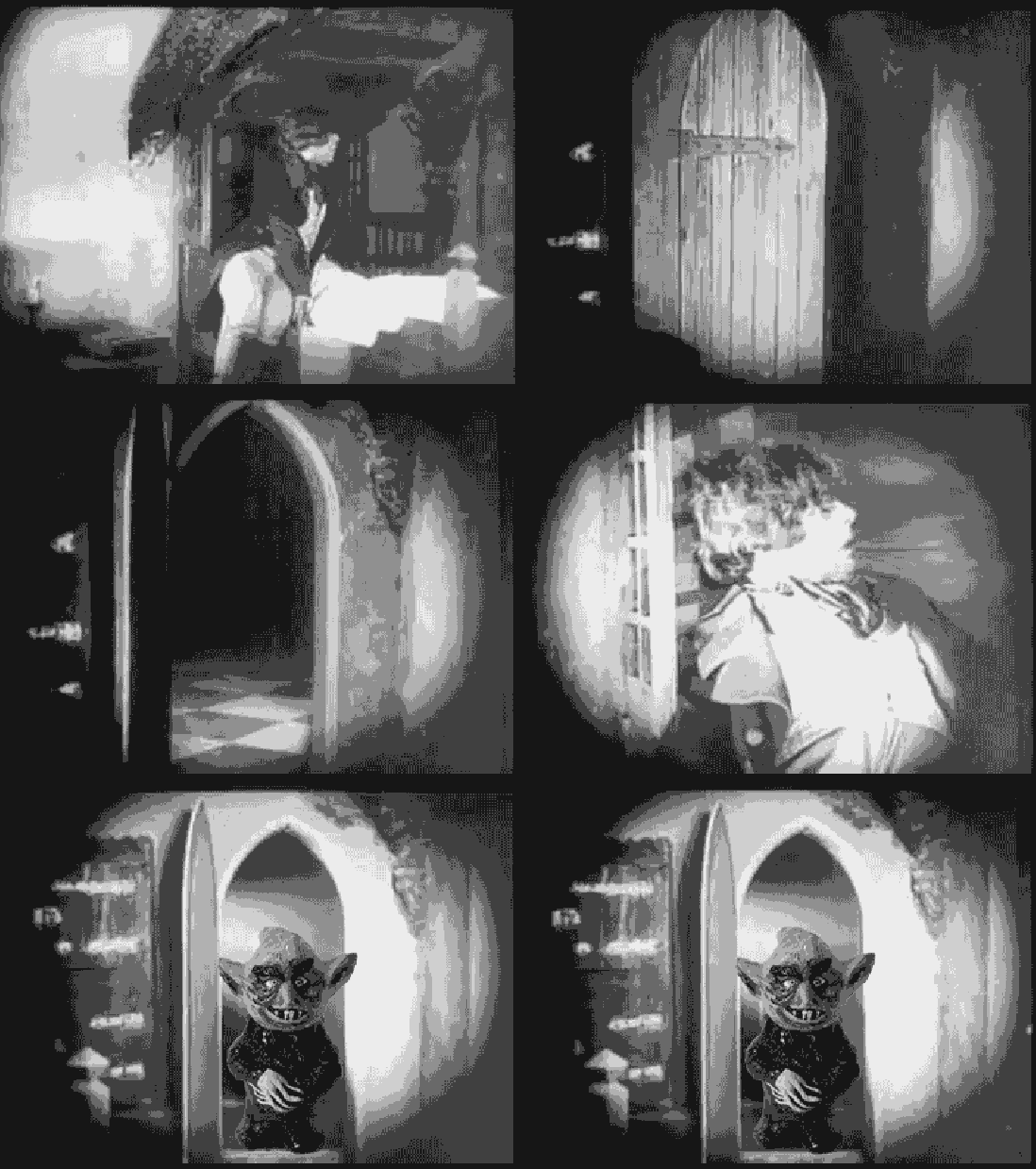
gnosferatu

This is where things get interesting, I think, and where a space for artistic intervention into the Zwergenproblem begins to disclose itself. The example of Internet-based travel, which of course depends on real money (hence real labor) and ideally gets real bodies to real places, places the garden gnome squarely in the realm of the so-called “new aesthetic” — which James Bridle describes as “a series of artefacts of the heterogeneous network, which recognises differences, the gaps in our overlapping but distant realities,” especially as concerns the intersection of material and digital realms. The neo-liberated gnome embodies capital as it flows within the control society, and it both emulates and encourages the “participatory culture” of viral marketing, whereby the unpaid immaterial labor done on social networks is appropriated and a surplus value is extracted by algorithmic means. What better mascot than the neo-liberated gnome, which bears witness to the wonders of the world, makes us hungry for travel (and for good-natured pranks), and even tempts us to donate our labor by posting pictures to Facebook et al that will serve as further advertisement for that travel company with the funny garden gnome…

????????????????????????????

The association with the “new aesthetic” is even clearer in the context of 3D printing and scanning technologies, where the garden gnome has become a symbol for that magical intersection of materially unique objects rendered digitally reproducible, as in MakerBot’s extensive use of the gnome to demonstrate their machines. There should be no doubt about it: 3D printing really does involve a revolutionary sort of realignment of the physical and the ideal, but why should the garden gnome become the symbol for this transformation? The answer, I think, has to do with the fact that before it became the mascot for the new aesthetic, the garden gnome was a mascot for a putatively “old aesthetic” that itself was secretly bound up in the appearance of industrial modernity and its “aesthetic of the new.” The garden gnome’s origins are in nineteenth-century Germany; accordingly, the creatures must be seen as an essentially modern phenomenon, and as a part of the popular culture that begins to emerge in Europe alongside industrial technologies of production and communication. And yet they feign resistance to that culture, pretending to belong to a romanticized folk culture that is pitted against the emerging commercial popular culture. The gnome, in other words, claims allegiance to the oral culture and local tradition that bequeaths to us the fairy-tale, and it aims to distinguish itself from the mass-produced industrial culture of the modern world — to which, nevertheless, it essentially and materially belongs! Now, with the advent of 3D printing and design, the possibility of digital reproduction calls the gnomes’ bluff, makes their mass and serialized nature apparent, and reveals that they have been subject from the start to the same iterative principles as the serial figures of popular culture. What’s more: the digital infrastructure democratizes the production process, putting the means of production in the hands of the many (or at least in the hands of the growing number who have access to the technology). The gnome becomes shareable across time and space, and subject to a serial process of modification. But again there is the danger that the material and immaterial labor of this “participatory culture” is subject to appropriation and exploitation.

Gaga-Gnomes-Digital-Seriality_smallest

Besides, there’s nothing very subversive about printing born-digital gnomes in order to repeat the pranks of their more earthy forebears. If we’re really going to do something about the Zwergenproblem — i.e. if we are going to address the problematic politics of the garden gnome as it exists in our transitional moment — we will have to do so with a historical consciousness, one cognizant of the gnomes’ troubled history, their relation to modern production processes, material and immaterial labor, class consciousness, nationalism, popular and high-art cultural formations, and the role of seriality in all of these constellations.

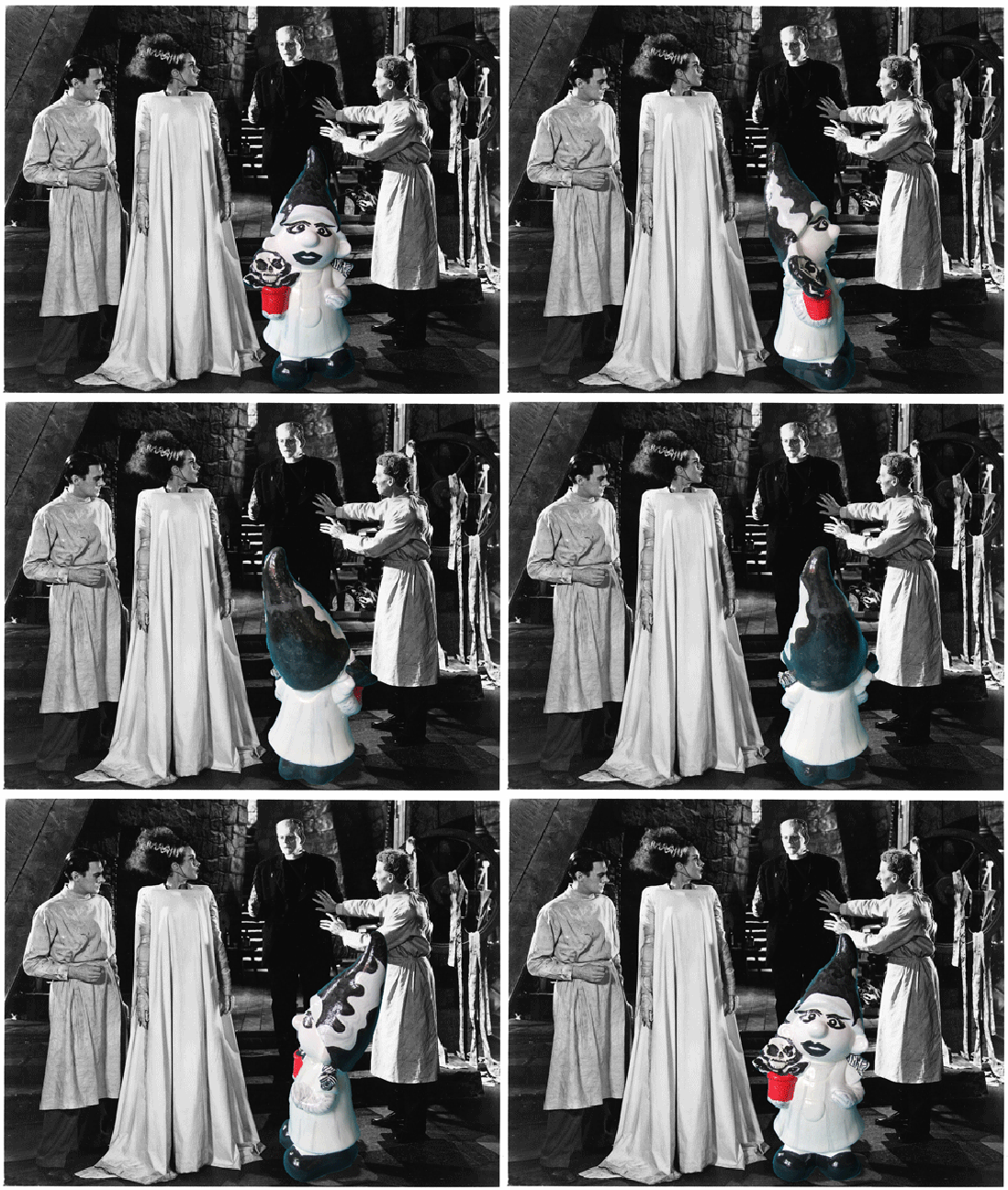
frankie-and-bride

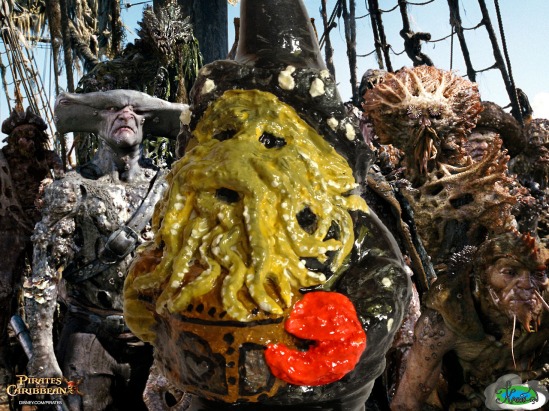
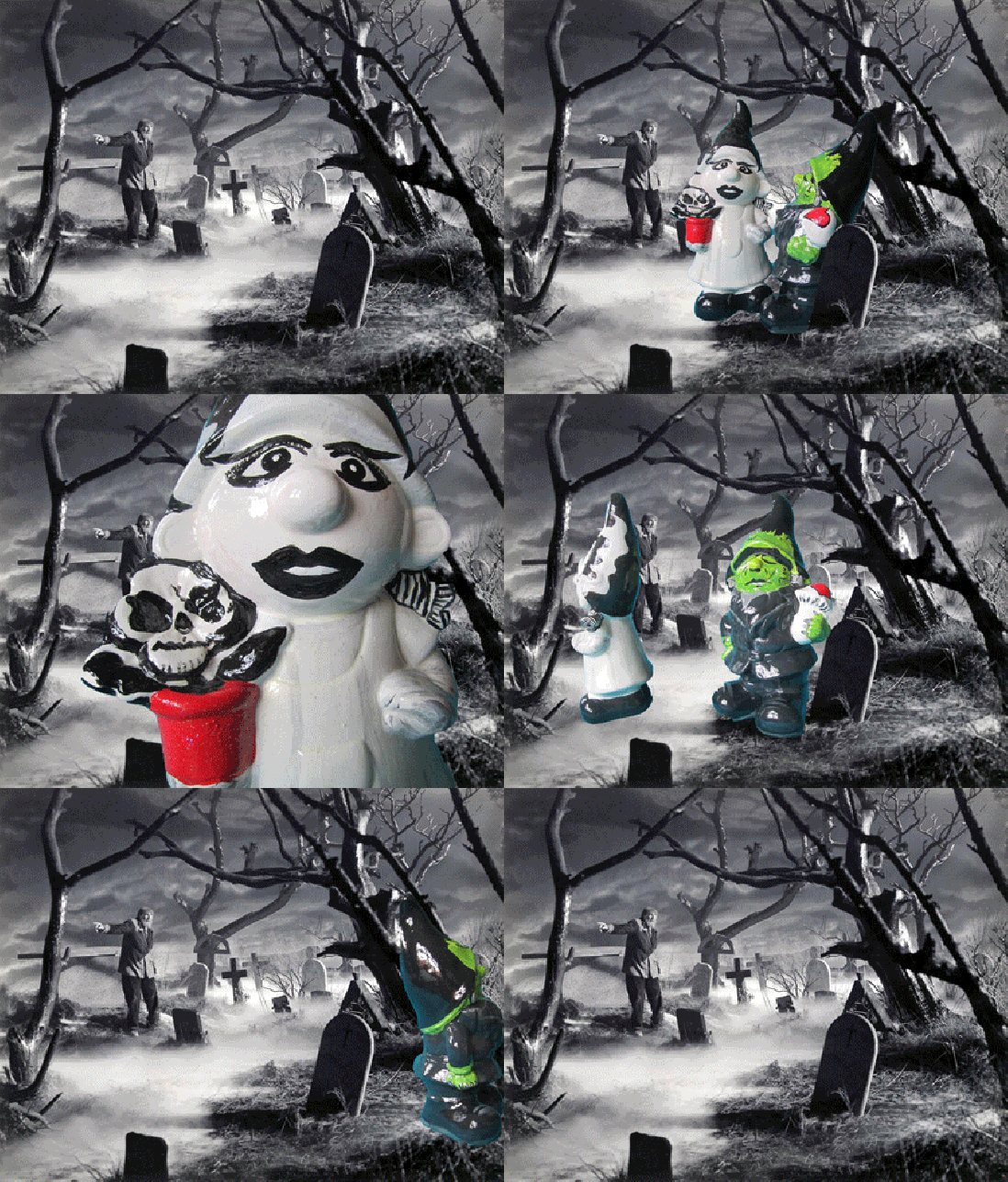
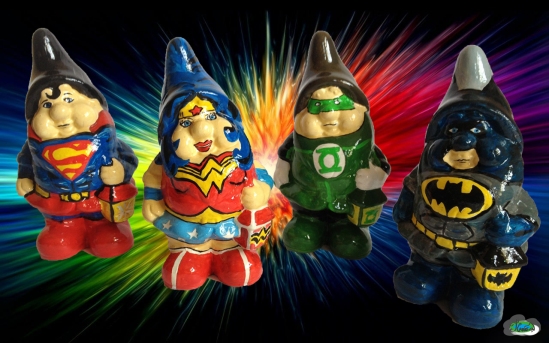
From an artistic perspective, no one is doing a better job of this at present, I think, than Karin Denson, with her “Krass People” series of gnomes, which are featured throughout this post. (Full disclosure: Karin is my wife. I’m biased. So what? No one’s got better gnomes than her!) Based on iconic figures from popular culture and modern art, her gnomes call into question the boundaries between industrial mass production, pre-modern handcraft, and modern and postmodern artistry. Half ready-made, half carefully crafted objects, the gnomes are collected from flea markets, outlet stores, garage sales, eBay, and wherever else they might be found, before they are hand painted and occasionally re-sculpted to resemble superheroes like Superman or Batman, creatures such as Nosferatu or Frankenstein’s monster, pop stars like Lady Gaga or David Bowie, figures from Star Wars or Pirates of the Caribbean, or re-imaginings of artworks by Duchamp, Miró, or Dalí. The result is a set of unique physical objects that retain strong conceptual and material links to the cultures of seriality that, since the nineteenth century, have increasingly and irrevocably problematized any notion of uniqueness or (artistic) authenticity. Finally, the objects are digitized and their images subjected to various further transformations: placed in Photoshop collages, set in motion in animated gifs, and displayed in a growing virtual gallery on tumblr. And that’s just the beginning: video, generative, and other works are in planning.

justice-gnomes

So does this answer the Zwergenproblem? Perhaps not completely. After all, can there be a truly final answer to a problem that is so thoroughly serial in both its historical genesis and its structural formation? Any answer, it would seem, would itself have to be serial rather than static. And that’s precisely what we have here: an ongoing, serially unfolding, plurimedial and mixed-reality approach that may not answer, but which first succeeds in formulating or addressing, that central problem of the modern world: das Zwergenproblem.

Gaga-Gnome-Applause-Series

Finally, in case you’re interested: Karin’s gnomes are available for purchase, but there is only a very limited supply of these (problematically) unique and labor-intensive objects. Karin will be exhibiting and selling them this coming Sunday, November 3, 2013, at the Kunsthandwerkermarkt at the Kulturzentrum Faust (from 11am to 5 pm in the “Warenannahme”).

[UPDATE: There’s now an Etsy store where the gnomes can be purchased online: https://www.etsy.com/shop/KrassStuff]

bride

Now Open Access: Bildstörung / Image Interference

fantomas

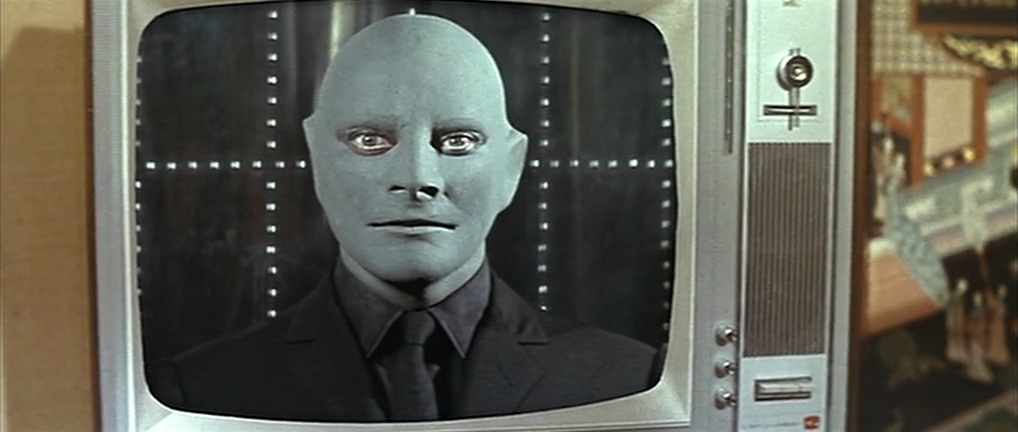
After appearing one year ago in Zeitschrift für Medienwissenschaft 7, the article “Bildstörung: Serielle Figuren und der Fernseher” [roughly, Image Interference: Serial Figures and the Television Set], co-authored by myself and Ruth Mayer, has now gone into open access and can be downloaded freely at the publisher’s website: here. In addition, the rest of the articles in this special issue devoted to “The Series” are now freely available here. I am very happy to be a part of this great collection, and I applaud ZfM‘s commitment to making their journals open access after an initial one-year print-only period.

Super Star Trek and the Collective Serialization of the Digital

SuperStarTrek

Here’s a sneak peek at something I’ve been working on for a jointly authored piece with Andreas Jahn-Sudmann (more details soon!):

[…] whereas the relatively recent example of bullet time emphasizes the incredible speed of our contemporary technical infrastructure, which threatens at every moment to outstrip our phenomenal capacities, earlier examples often mediated something of an inverse experience: a mismatch between the futurist fantasy and the much slower pace necessitated by the techno-material realities of the day.

The example of Super Star Trek (1978) illuminates this inverse sort of experience and casts a media-archaeological light on collective serialization, by way of the early history of gaming communities and their initially halting articulation into proto-transmedia worlds. Super Star Trek was not the first – and far from the last – computer game to be based on the Star Trek media franchise (which encompasses the canonical TV series and films, along with their spin-offs in comics, novels, board games, role-playing games, and the larger Trekkie subculture). Wikipedia lists over seventy-five Trek-themed commercial computer, console, and arcade games since 1971 (“History of Star Trek Games”) – and the list is almost surely incomplete. Nevertheless, Super Star Trek played a special role in the home computing revolution, as its source code’s inclusion in the 1978 edition of David Ahl’s BASIC Computer Games was instrumental in making that book the first million-selling computer book.[i] The game would continue to exert a strong influence: it would go on to be packaged with new IBM PCs as part of the included GW-BASIC distribution, and it inspired countless ports, clones, and spin-offs in the 1980s and beyond.

A quick look at the game’s source code reveals that Super Star Trek didn’t just come out of nowhere, however: Here, the opening comment lines (“REM” indicates a non-executable “remark” in BASIC) mention not only the “Star Trek TV show” as an influence, but also a serial trajectory of inter-ludic programming, modification, debugging, and conversion (porting) that begins to outline a serialized collectivity of sorts. Beyond those participants mentioned by name (Mike Mayfield, David Ahl, Bob Leedom, and John Borders), a diffuse community is invoked – “with a little help from his friends…” – and, in fact, solicited: “comments, epithets, and suggestions” are to be sent personally to R. C. Leedom at Westinghouse Defense & Electronics. Reminiscent of a comic-book series’ “letters to the editor” page (cf. Kelleter and Stein 2012), this invitation promises, in conjunction with the listing of the game’s serial lineage, that readers’ opinions are valued, and that significant contributions will be rewarded (or at least honored with a hat-tip in the REM’s). Indeed, in these few preliminary lines, the program demonstrates its common ground with serialized production forms across media: since the nineteenth century, readers have written to the authors of ongoing series in order to praise or condemn – and ultimately to influence – the course of serial unfolding (cf. Hayward 1997, Looby 2004, Smith 1995, Thiesse 1980); authors dependent on the demands of a commercial marketplace were not at liberty simply to disregard their audience’s wishes, even if they were free to filter and select from among them. What we see, then, from an actor-network perspective, is that popular series therefore operate to create feedback loops in which authors and readers alike are involved in the production of serial forms (cf. Kelleter 2012a) – which therefore organize themselves as self-observing systems around which serialized forms of (para-)social interaction coalesce (cf. Kelleter 2012d, as well as the contributions to Kelleter 2012b).

The snippet of code above thus attests to the aspirations of a germinal community of hackers and gamers, which has tellingly chosen to align itself, in this case, with one of the most significant and quickly growing popular-culture fan communities of the time: viz. the Trekkie subculture, which can be seen to constitute a paradigmatic “seriality” in Anderson’s sense – a nation-like collective (complete with its own language) organized around the serialized consumption of serially structured media. And, indeed, the computing/gaming community had its own serialized media (and languages) through which it networked, including a plethora of computer-listings newsletters and magazines – such as David Ahl’s Creative Computing, where Super Star Trek had been published in 1974, before BASIC Computer Games made it more widely known; or People’s Computer Company, where Bob Leedom had mentioned his version before that; or the newsletter of the Digital Equipment Computer User Society, where Ahl had originally published a modified version of Mike Mayfield’s program. These publications served purposes very much like the comic-book and fanzine-type organs of other communities; here, however, it was code that was being published and discussed, thus serving as a platform for further involvement, tweaking, and feedback by countless others. Accordingly, behind the relatively linear story of development told in the REM’s above, there was actually a sprawling, non-linear form of para-ludic serialization at work in the development of Super Star Trek.[ii]

And yet we see something else here as well: despite the computing industry’s undeniable success in moving beyond specialized circles and involving ever larger groups of people in the activity of computing in the 1970s (and gaming must certainly be seen as central to achieving this success), the community described above was still operating with relatively crude means of collective serialization – more or less the same paper-bound forms of circulation that had served the textual and para-textual production of popular serialities since the nineteenth century. In many ways, this seems radically out of step with the space-age fantasy embodied in Super Star Trek: in order to play the game, one had to go through the painstaking (and mistake-prone) process of keying in the code by hand. If, afterwards, the program failed to run, the user would have to search for a misspelled command, a missing line, or some other bug in the system. And God forbid there was an error in the listing from which one was copying! Moreover, early versions of the game were designed for mainframe and minicomputers that, in many cases, were lacking a video terminal. The process of programming the game – or playing it, for that matter – was thus a slow process made even slower by interactions with punch-card interfaces. How, under these conditions, could one imagine oneself at the helm of the USS Enterprise? There was a mismatch, in other words, between the fantasy and the reality of early 1970s-era computing. But this discrepancy, with its own temporal and affective dynamics, was a framing condition for a form of collective serialization organized along very different lines from contemporary dreams of games’ seamless integration into transmedia worlds.

To begin with, it is quite significant that Super Star Trek’s functional equivalent of the “letters to the editor” page, where the ongoing serialization of the game is both documented and continued, is not printed in an instruction manual or other accompanying paraphernalia but embedded in the code itself. In contrast to the mostly invisible code executed in mainstream games today, Super Star Trek’s code was regarded as highly visible, the place where early gamers were most likely to read the solicitation to participate in a collective effort of development. Clearly, this is because they would have to read (and re-write) the code if they wished to play the game – while their success in actually getting it to work were more doubtful. Gameplay is here subordinated to coding, while the pleasures of both alike were those of an operational aesthetic: whether coding the game or playing it, mastery and control over the machine were at stake. Unlike the bullet time of The Matrix or Max Payne, which responds to an environment in which gamers (and others) are hard-pressed to keep up with the speed of computation, Super Star Trek speaks to a somewhat quainter, more humanistic dream of getting a computational (or intergalactic) jalopy up and running in the first place. In terms of temporal affectivities, patience is tested more so than quick reactions. If bullet time slowed down screen events while continuing to poll input devices as a means for players to cope with high-velocity challenges, the tasks of coding and playing Super Star Trek turn this situation around: it is not the computer but the human user who waits for – hopes for – a response. As a corollary, however, relatively quick progress was observable in the game’s inter-ludic development, which responded to rapid innovations in hardware and programming languages. This fact, which corresponded well with the basically humanistic optimism of the Star Trek fantasy (as opposed to the basically inhuman scenario of The Matrix), motivated further involvement in the series of inter-ludic developments (programming, modification, debugging, conversion…), which necessarily involved coder/tinkerers in the para-ludic exchanges upon which a gaming community was being built. […]


[i] A more complete story of the game’s history can be gleaned from several online sources which we draw on here: Maury Markowitz’s page devoted to the game, “Star Trek: To boldly go… and then spawn a million offshoots,” at his blog Games of Fame (http://gamesoffame.wordpress.com/star-trek/) features comments and correspondence with some of the key figures in the game’s development; Pete Turnbull also recounts the game’s history, including many of the details of its many ports to various systems (http://www.dunnington.u-net.com/public/startrek/); atariarchives.org hosts a complete scan of the 1978 edition of BASIC Computer Games, from which we reproduce an excerpt below (http://www.atariarchives.org/basicgames/); and a recent article in The Register, Tony Smith’s “Star Trek: The Original Computer Game,” features several screenshots and code snippets of various iterations (http://www.theregister.co.uk/Print/2013/05/03/antique_code_show_star_trek/).

[ii] A better sense of this can be had by taking a look at all the various iterations of the game – encompassing versions for a variety of flavors of BASIC and other languages as well – collected by Pete Turnbull (http://www.dunnington.u-net.com/public/startrek/).

Works Cited

Hayward, J. (1997) Consuming Pleasures: Active Audiences and Serial Fictions from Dickens to Soap Opera. Lexington: UP of Kentucky.

Kelleter, F. (2012a) Populäre Serialität: Eine Einführung. In Kelleter F., ed. Populäre Serialität: Narration – Evolution – Distinktion. Zum seriellen Erzählen seit dem 19. Jahrhundert. Bielefeld: Transcript, pp. 11-46.

Kelleter, F., ed. (2012b) Populäre Serialität: Narration – Evolution – Distinktion. Zum seriellen Erzählen seit dem 19. Jahrhundert. Bielefeld: Transcript.

Kelleter, F. (2012d) The Wire and Its Readers. In Kennedy, L. and Shapiro, S., eds. “The Wire”: Race, Class, and Genre. Ann Arbor: U of Michigan P, pp. 33-70.

Kelleter, F. and Stein, D. (2012) Autorisierungspraktiken seriellen Erzählens: Zur Gattungsentwicklung von Superheldencomics. In Kelleter, F., ed. Populäre Serialität: Narration – Evolution – Distinktion. Zum seriellen Erzählen seit dem 19. Jahrhundert. Bielefeld: Transcript, pp. 259-290.

Looby, C. (2004) Southworth and Seriality: The Hidden Hand in the New York Ledger. Nineteenth-Century Literature 59.2, pp. 179-211.

Smith, S. B. (1995) Serialization and the Nature of Uncle Tom’s Cabin. In Price, K. M. and Smith, S. B., eds. Periodical Literature in Nineteenth-Century America. Charlottesville: UP of Virginia, pp. 69-89.

Thiesse, A.-M. (1980) L’education sociale d’un romancier: le cas d’Eugène Sue. Actes de la recherche en sciences sociales 32-33, pp. 51-63.

Serialization in Popular Culture

figure2b-pauline

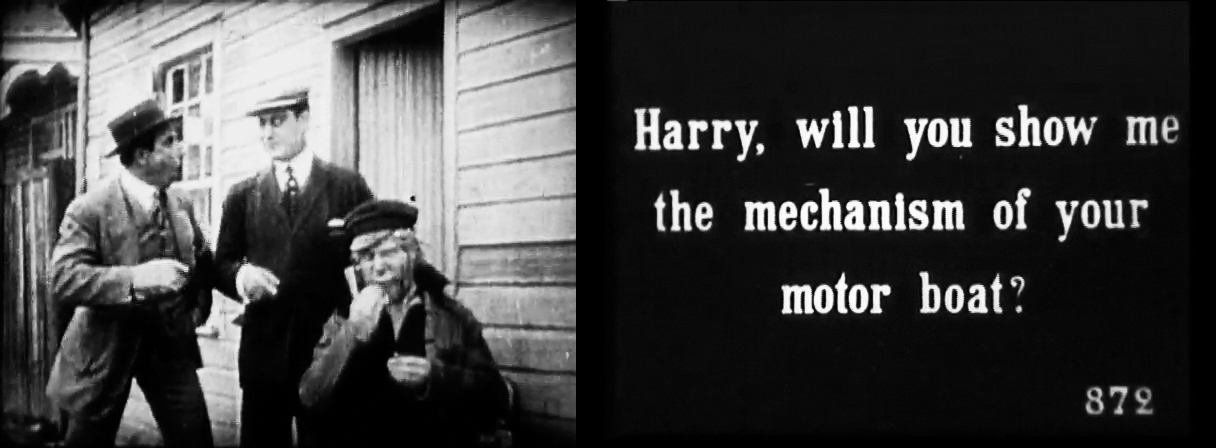
Above, two stills from The Perils of Pauline, which I take here as an opportunity to announce an exciting book set to come out at the end of this year: Serialization in Popular Culture, edited by Robert Allen and Thijs van den Berg at the University of Amsterdam. The book, which I am very proud to be a part of (with a piece called “The Logic of the Line Segment: Continuity and Discontinuity in the Serial-Queen Melodrama”), will be published by Routledge as part of the Routledge Research in Cultural and Media Studies series.

Here’s a brief description of the collection:

From prime-time television shows and graphic novels to the development of computer game expansion packs, the recent explosion of popular serials has provoked renewed interest in the history and economics of serialization, as well as the impact of this cultural form on readers, viewers, and gamers. In this volume, contributors—literary scholars, media theorists, and specialists in comics, graphic novels, and digital culture—examine the economic, narratological, and social effects of serials from the nineteenth to the twenty-first century and offer some predictions of where the form will go from here.

With sections on “Victorian Serials,” “Serialization on Screen,” “Serialization in Comic Books and Graphic Novels,” and “Digital Serialization,” this book is going to be an important contribution to the emerging field of seriality studies. But don’t take my word for it; here’s an endorsement from an expert in the field:

“This collection presents an ambitious and original intervention in the field of seriality studies. It captures the workings of serialization as a core principle of modernity by taking stock of a wide range of medial formats and narrative and non-narrative configurations from the nineteenth century to the present time.” — Ruth Mayer, University of Hanover, Germany